Introduction
Choosing a synthetic food color involves more than checking its shade and price. Food manufacturers must consider purity, dye content, chemical identity, impurity levels, batch consistency, and regulatory compliance before purchasing a color additive.
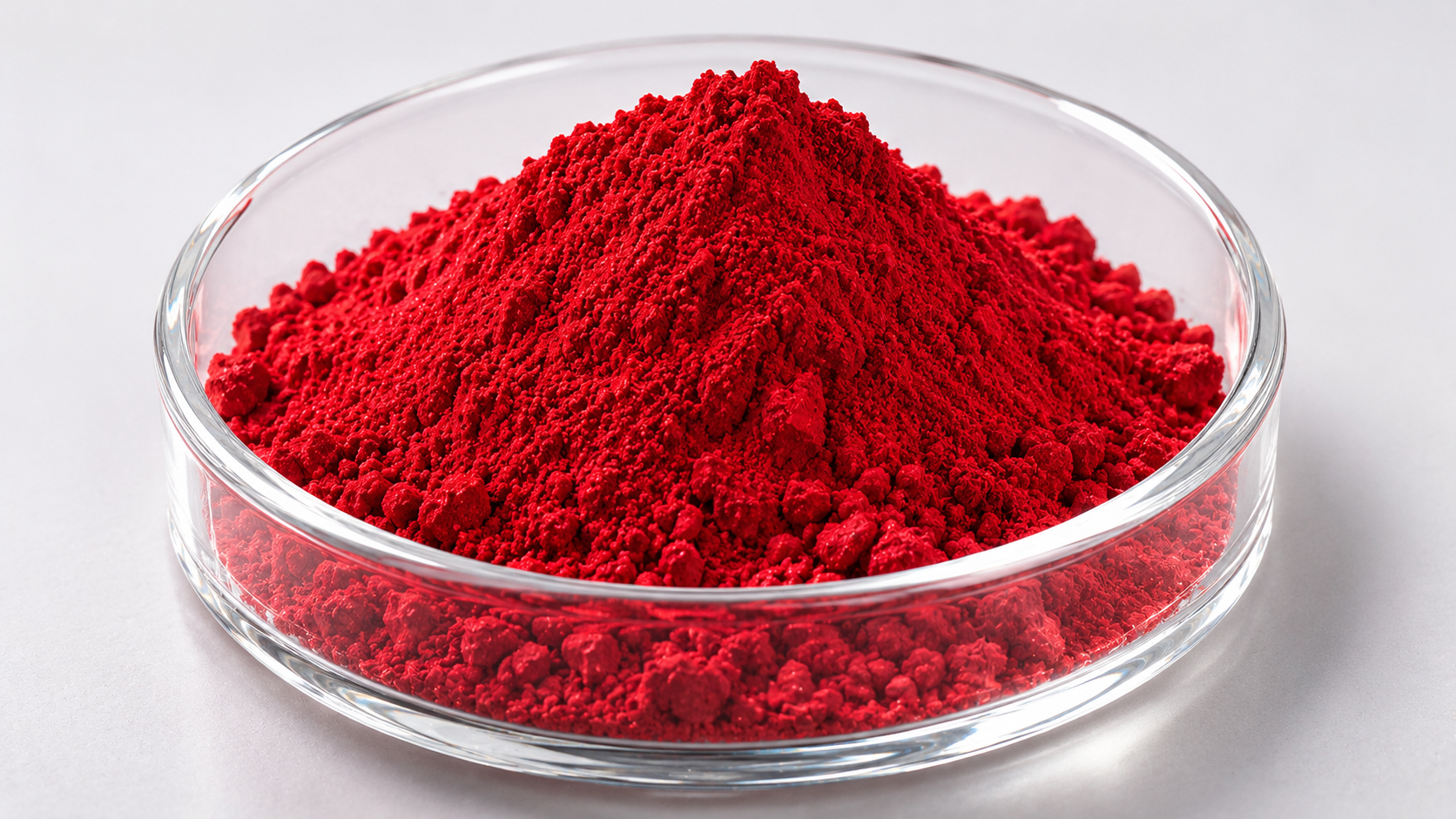
Ponceau 4R, also known as E124, INS 124, or CI 16255, is a synthetic red azo dye used in certain food applications. It is commonly supplied as a reddish powder or granules and is valued for its red coloring properties.
However, its permitted applications and maximum usage levels vary between countries. A product that meets one country’s specifications may not automatically meet another country’s requirements.
For food manufacturers, importers, and procurement teams, understanding Ponceau 4R specifications is essential before selecting a supplier. This guide explains the important quality parameters, testing requirements, and regulatory checks buyers should consider when sourcing Ponceau 4R.
1. Understand the Chemical Identity of Ponceau 4R
Before evaluating a supplier, confirm that the product is actually Ponceau 4R and not another red synthetic dye.
Key identification details include:
- Common name: Ponceau 4R
- INS number: 124
- EU number: E124
- Colour Index number: CI 16255
- Chemical class: Monoazo dye
- CAS number: 2611-82-7
- Chemical formula: C20H11N2Na3O10S3
- Appearance: Reddish powder or granules
- Water solubility: Soluble in water
Ponceau 4R is primarily supplied as a trisodium salt. Its chemical identity and characteristic absorption spectrum help laboratories verify the material.
Buyers should request a technical data sheet (TDS) and certificate of analysis (COA) to confirm the product’s identity and declared specifications.
2. Check Ponceau 4R Specifications and Purity Requirements
Purity is one of the most important factors when purchasing synthetic food dyes. Buyers should not evaluate quality based only on the color’s appearance or declared dye content.
Important parameters include:
- Total dye content: This indicates the amount of actual coloring matter in the product. The minimum requirement depends on the applicable regulatory specification. For example, the EU specification requires at least 80% total coloring matter, calculated as the sodium salt.
- Water-insoluble matter: Excess insoluble material can affect product clarity and processing. The EU specification sets a maximum of 0.2%.
- Subsidiary coloring matters: These are related coloring substances formed during dye manufacturing. Their levels must remain within the applicable regulatory limits.
- Organic impurities: Residual manufacturing intermediates and other organic compounds must be controlled.
- Unsulfonated primary aromatic amines: These impurities require particular attention because their presence is subject to strict limits.
- Ether-extractable matter: This parameter helps assess certain non-water-soluble impurities in the finished dye.
Buyers should compare every result against the specification applicable to their destination market rather than assuming that one international specification applies everywhere.

3. Evaluate Heavy Metal and Contaminant Levels
Heavy metal testing is another important part of food color quality control.
Buyers should review the following parameters:
- Lead
- Arsenic
- Mercury
- Cadmium
For reference, the EU specification for Ponceau 4R sets maximum limits of 2 mg/kg for lead, 3 mg/kg for arsenic, 1 mg/kg for mercury, and 1 mg/kg for cadmium.
These limits should not be confused with other national standards, which may have different requirements.
Ask the supplier for recent laboratory results showing individual contaminant levels. A general statement such as “heavy metals within limits” is not a substitute for a detailed COA.
4. Check Regulatory Requirements Before Purchasing
Regulatory approval is one of the most important considerations when sourcing Ponceau 4R for food manufacturing.
Different markets have different rules.
- European Union: Ponceau 4R is listed as E124. Its identity and purity specifications are defined under Commission Regulation (EU) No. 231/2012. Its permitted food categories and maximum use levels are governed by the applicable food additive legislation. Certain labeling requirements also apply.
- India: Ponceau 4R is included in India’s permitted synthetic food color framework. However, its use is restricted to specified food categories and applicable maximum limits under FSSAI regulations. Buyers should check the latest category-specific provisions before using it.
- United States: Ponceau 4R is not authorized by the FDA for use as a food color additive. Buyers supplying the US market should not assume that E124 or INS 124 approval in another country makes it acceptable in US food products.
This distinction is particularly important for exporters and international food manufacturers.
Also, FD&C dyes and D&C dyes are separate US regulatory classifications. Ponceau 4R does not have an approved FD&C or D&C designation for US food use.
5. Review the Certificate of Analysis Before Approval
A Certificate of Analysis (COA) provides batch-specific information about the product’s quality.
Before approving a Ponceau 4R supplier, check whether the COA includes:
- Product name and identification number
- Batch or lot number
- Manufacturing and testing dates
- Total dye content
- Water-insoluble matter
- Subsidiary coloring matters
- Relevant organic impurities
- Heavy metal results
- Applicable test methods
- Specification limits and actual test results
The COA should represent the actual batch being supplied. Buyers should also check whether the results come from suitable laboratory methods and whether independent testing is required under their quality assurance procedures.
6. Evaluate Batch-to-Batch Consistency and Supplier Quality
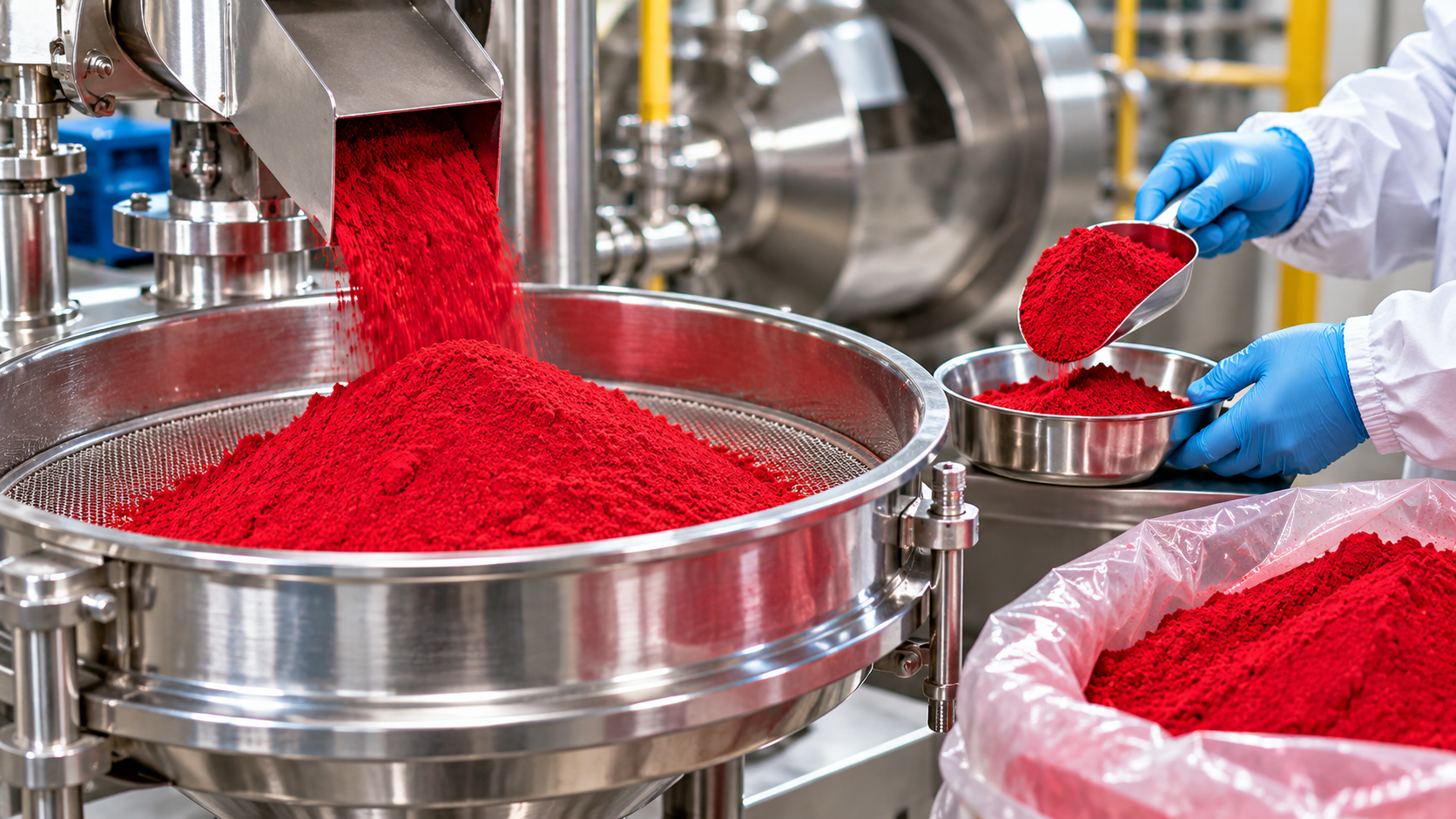
Even when a product meets regulatory specifications, inconsistent batches can create problems during manufacturing.
Changes in dye strength, shade, solubility, or impurity levels may affect the final product.
Before placing regular orders, buyers should consider:
- Comparing samples from different production batches.
- Checking color strength and shade consistency.
- Evaluating solubility under intended processing conditions.
- Reviewing supplier quality control procedures.
- Confirming packaging, storage, and shelf-life information.
- Checking traceability and documentation availability.
A reliable supplier should be able to provide clear technical information and respond to quality-related questions.
For international buyers sourcing from dyes manufacturers in India, documentation, export experience, and destination-market compliance should be evaluated alongside pricing.
7. Questions to Ask Before Selecting a Ponceau 4R Manufacturer
Before finalizing a purchase, ask the manufacturer:
- Does the product meet the required FSSAI, EU, or other applicable food-grade specifications?
- Can you provide a batch-specific COA and technical data sheet?
- What are the actual dye content and impurity levels?
- Are heavy metal test results available?
- Can you provide samples for independent laboratory testing?
- Do you maintain batch traceability and consistent quality control?
- Can you provide documentation required for the destination market?
Comparing suppliers using these questions can help reduce sourcing risks and improve purchasing decisions.

Conclusion
Selecting Ponceau 4R requires more than comparing prices and color strength. Buyers should carefully review chemical identity, dye content, purity, heavy metal levels, batch consistency, and regulatory requirements before approving a supplier.
Most importantly, food additive approval must always be checked for the intended country and food category. Compliance in India or the European Union does not automatically mean approval in the United States.
If you are evaluating synthetic food dye suppliers, prioritize manufacturers that provide transparent specifications, batch-specific COAs, and reliable quality documentation.
Looking for a reliable synthetic dye manufacturing partner? Connect with Hridhan Chem to discuss your product requirements, technical specifications, and sourcing needs. Contact our team to learn more about our synthetic dye portfolio.
FAQs
Ponceau 4R is a synthetic red azo food dye used in permitted food applications, depending on the country’s regulations and the specific food category.
Ponceau 4R has INS number 124 and EU additive number E124. Its Colour Index number is CI 16255.
The EU specification requires a minimum of 80% total coloring matter, calculated as the sodium salt. Other national standards may specify different minimum requirements.
No. Ponceau 4R is not authorized by the FDA for use as a food color additive in the United States.
Buyers should check subsidiary coloring matters, organic impurities, unsulfonated primary aromatic amines, water-insoluble matter, and heavy metals such as lead, arsenic, mercury, and cadmium.
Buyers should request a batch-specific Certificate of Analysis, Technical Data Sheet, applicable regulatory compliance documents, and relevant laboratory test reports.
Buyers should compare chemical specifications, purity, batch consistency, testing procedures, manufacturing quality controls, traceability, and export documentation before selecting a manufacturer.