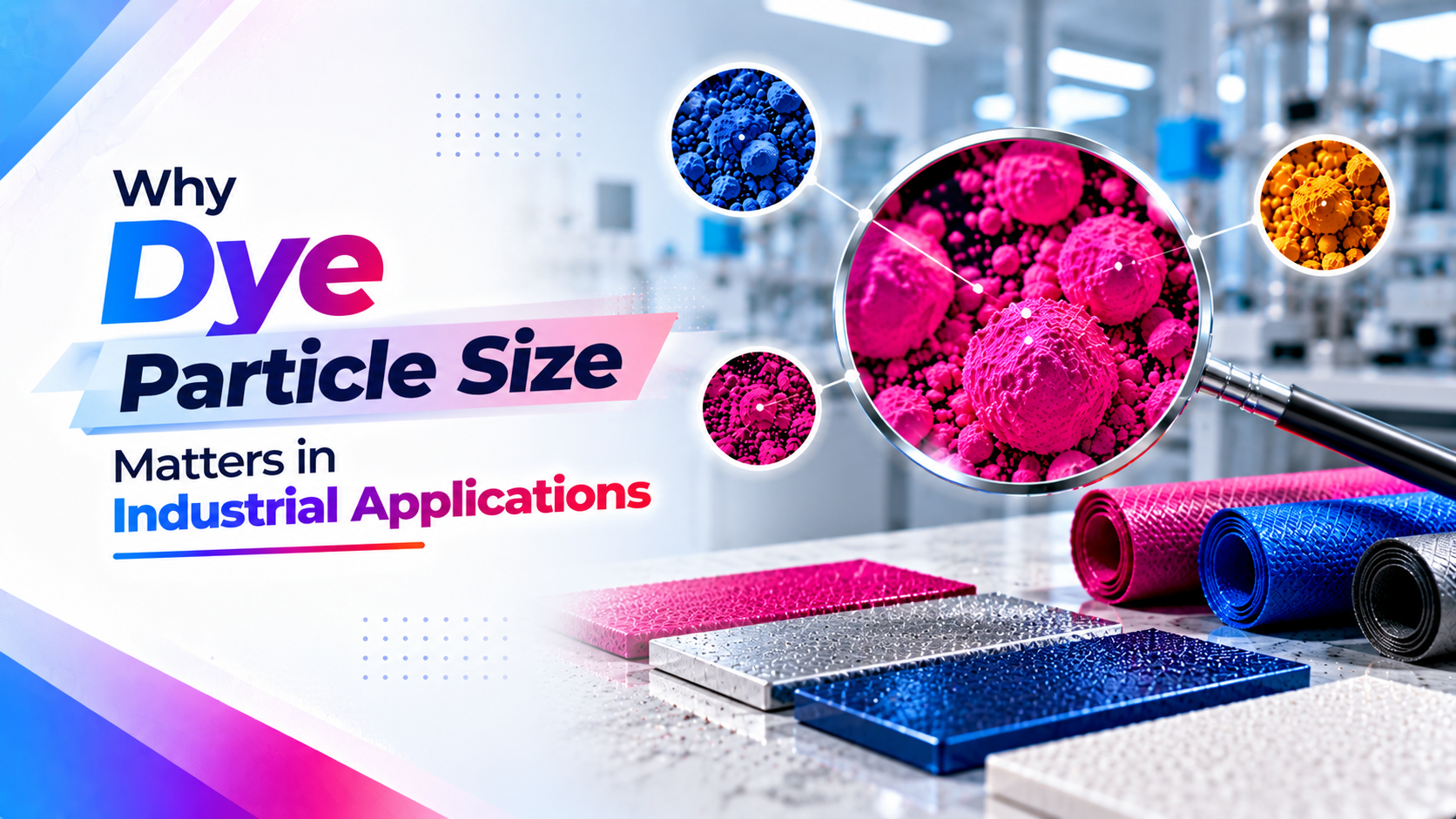
Why Dye Particle Size Matters in Industrial Applications
Introduction Color consistency is critical in industrial manufacturing. Whether a company produces food products, cosmetics, pharmaceutical formulations, or other colored materials, the color must meet the required specifications from one batch to the next. However, achieving the desired shade depends on more than selecting the right dye. For powdered dyes and pigments, particle size can affect how quickly a material dissolves or disperses, how evenly it spreads through a mixture, and how the final color appears. These effects depend on the dye’s chemical properties, solubility, formulation, and processing conditions. Understanding dye particle size helps manufacturers select suitable raw materials, improve production consistency, and reduce avoidable processing problems. What Is Dye Particle Size? Dye particle size refers to the size of individual particles in a powdered dye or pigment. It is commonly measured in micrometers (µm), although other units may be used for very fine materials. A dye powder may contain particles of different sizes rather than identical ones. This range is described as the particle size distribution. Three measurements are useful when evaluating a dye: D10: The size below which 10% of the measured particles fall. D50: The median particle size, below which 50% of the measured particles fall. D90:
Why Dye Particle Size Matters in Industrial Applications Read More