Introduction
Color consistency is an important part of product quality. In food, cosmetics, textiles, and other industrial applications, a dye must provide the required shade and maintain its appearance during processing, storage, and use. However, heat and light exposure can cause some dyes to fade, lose color strength, or change shade.
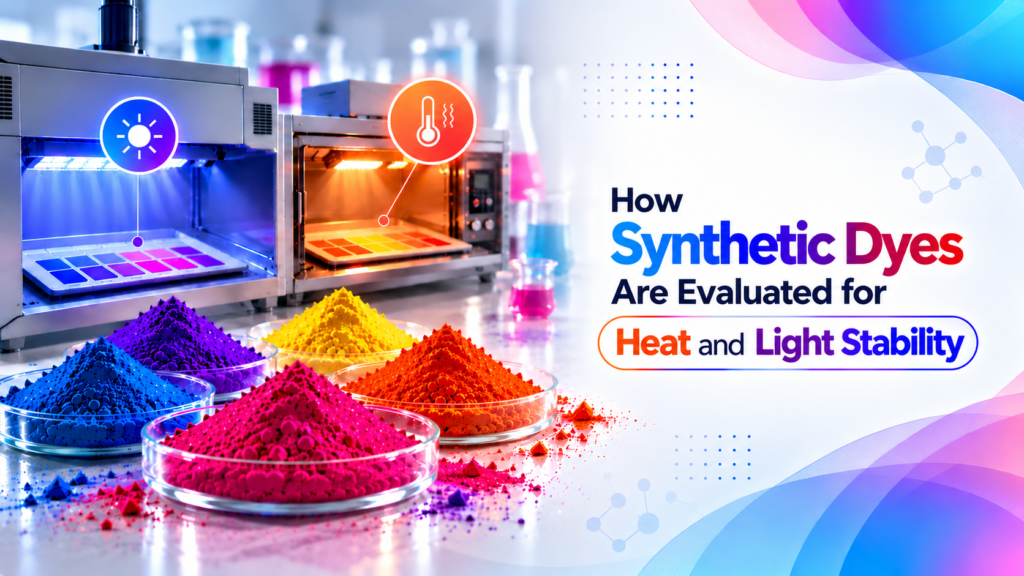
This is why heat and light stability testing of synthetic dyes is an important step in product evaluation. These tests help manufacturers understand how a dye performs under specific conditions before selecting it for a commercial application.
Heat stability and light stability are not the same. Heat stability measures how well a dye retains its color when exposed to elevated temperatures, while light stability measures how well it resists changes caused by light. Assess both properties based on the dye’s intended use.
What Is Heat Stability in Synthetic Dyes?
Heat stability refers to a dye’s ability to maintain its color properties when exposed to a defined temperature for a specific period.
During manufacturing, dyes may be heated, mixed, dried, or subjected to other processing conditions. Depending on the dye chemistry and the surrounding formulation, heat exposure may reduce color intensity or cause a visible shade change.
For example, a synthetic food dye used in a heat-processed product needs to be evaluated under conditions that reflect the actual production process. A dye that performs well at room temperature may not deliver the same result after prolonged heating.
Heat stability depends on several factors:
- Temperature: Higher temperatures can increase the rate of color degradation.
- Exposure time: A short heating cycle may produce a different result from prolonged heating.
- pH: Acidic and alkaline conditions can affect dye performance.
- Formulation: Other ingredients may influence color retention.
- Dye chemistry: Different synthetic dyes can respond differently under the same conditions.
For this reason, no single temperature defines heat stability for every synthetic dye. Testing must reflect the application and processing requirements.
How Are Synthetic Dyes Tested for Heat Stability?
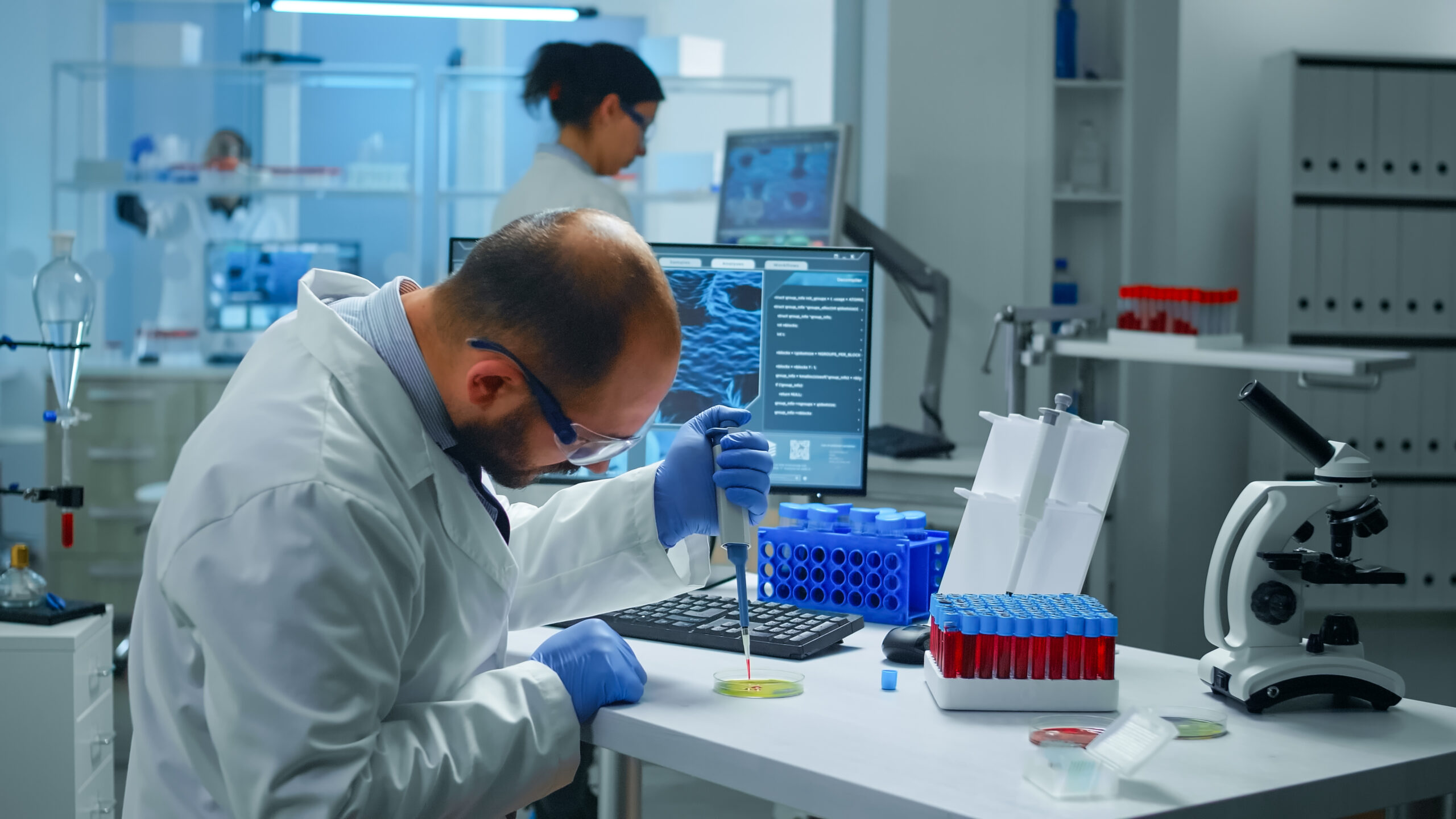
Heat stability testing generally involves preparing a dye sample under controlled conditions, exposing it to a selected temperature, and comparing its color before and after heating.
1. Prepare the Dye Sample
Prepare the dye at a defined concentration in a suitable medium. For food dyes, this may involve an aqueous solution or a representative food formulation. For other applications, the sample should reflect the intended product or substrate.
Keep concentration, pH, and preparation conditions consistent across samples.
2. Apply Controlled Heating
Heat the sample at a specified temperature for a set period. The selected conditions should reflect the expected manufacturing process or a defined screening requirement.
For example, a laboratory may evaluate a sample at 80°C for 30 minutes as an initial screening condition. This is only an example, not a universal industry standard or a guarantee of performance under other processing conditions.
3. Compare Color Before and After Heating
After heating, the sample is cooled as required by the test procedure and compared with the original sample.
The evaluation may include:
- Visible changes in shade
- Loss of color intensity
- Changes in absorbance using a spectrophotometer
- Color difference measurements using a suitable color measurement system
A smaller measured color difference generally indicates better color retention under the tested conditions. Acceptance limits should be established for the specific application.
4. Record the Results
The report should include the dye identity, concentration, medium, pH, temperature, exposure time, and observed color change. These details make results easier to compare between batches and suppliers.
What Is Light Stability in Synthetic Dyes?
Light stability describes a dye’s ability to retain its color when exposed to light. Light can trigger chemical changes in certain dye molecules, causing fading or a shift in shade. This process is often called photodegradation.
The degree of change depends on the dye’s chemical structure, light intensity, exposure duration, surrounding formulation, and other environmental conditions.
Light stability matters when colored products are displayed under store lighting, stored in transparent packaging, or exposed to daylight during use.
For example, a colored liquid may look consistent immediately after production but fade after extended light exposure. Testing helps identify this risk before the product reaches the market.
How Is Light Stability Testing Performed?
Light stability testing uses controlled exposure to evaluate how much a dye’s color changes over time.
1. Prepare a Consistent Sample
Prepare the test sample at a defined concentration under controlled conditions. Use the same sample type, pH, and preparation method when comparing different dyes.
2. Expose the Sample to Light
Expose the sample to a selected light source for a defined period. Depending on the application, testing may use controlled laboratory lighting or a specialized light-exposure instrument.
Xenon arc testing is one established method for evaluating color fastness to artificial light in textiles. ISO 105-B02 specifies this method for textile materials; it should not be treated as a universal testing standard for food or cosmetic dyes.
3. Measure Color Change
Compare the exposed sample with an unexposed control. Evaluations may include visible fading, shade changes, and instrumental color measurements.
Document exposure conditions because results from different light sources, intensities, and exposure periods may not be directly comparable.
4. Assess Performance
The results help determine whether the dye meets the light stability requirements of the intended application. If the color change exceeds the acceptable limit, you may need further to evaluate the formulation, dye selection, or packaging.
Key Differences Between Heat and Light Stability Testing
Main stressElevated temperatureLight exposureCommon concernColor loss or shade change during processingFading or shade change during exposureImportant test conditionsTemperature, time, pH, and formulationLight source, intensity, exposure time, and sample conditionsTypical evaluationColor comparison before and after heatingColor comparison between exposed and control samplesMain purposeAssess performance during thermal processingAssess color retention during light exposure
Passing one test does not automatically mean a dye will pass the other. Both properties must be evaluated when both heat and light are relevant to the product.
Why Heat and Light Stability Matter in Food and Cosmetic Dyes
In food applications, heat stability may matter during cooking, pasteurization, or other thermal processing steps. Light stability may matter when products are stored or displayed in transparent packaging. The actual requirements depend on the food matrix, pH, ingredients, process, and storage conditions.
For cosmetic applications, evaluate dye performance in the intended formulation. The product’s ingredients, pH, packaging, and expected exposure conditions can influence color retention. Results from a simple laboratory solution may not predict performance in a finished cosmetic product.
A reliable evaluation therefore considers the complete formulation rather than the dye alone. Color stability testing also does not establish regulatory approval or safety; assess these separately for the intended use and market.
What Should Buyers Ask Synthetic Dye Manufacturers?
When sourcing synthetic dyes, buyers should look beyond the initial shade and request evidence that the product meets their application requirements.
Consider asking the supplier for:
- Heat and light stability test results, where relevant.
- Test conditions, including temperature, exposure time, pH, and sample concentration.
- Batch-to-batch color consistency data.
- Technical specifications and relevant quality documentation.
- Application-specific samples for laboratory or production trials.
- Information on permitted use and applicable regulatory requirements.
For buyers evaluating dye manufacturers in India, these details help support a more informed supplier comparison. A food dyes manufacturer should be able to explain the suitability of a dye for the intended food application. In contrast, a cosmetic dyes manufacturer should provide relevant technical information for the proposed cosmetic use.
Check supplier claims against test reports and actual application trials. A statement such as “high heat stability” is not enough unless the conditions and results supporting it are clear.
Conclusion
Heat and light stability testing helps manufacturers understand whether a synthetic dye can retain its color under defined processing, storage, and use conditions. Heat testing focuses on temperature exposure, while light testing evaluates how light affects color retention. Neither test can replace the other when both conditions matter.
The most useful results come from controlled testing, clear records, and samples that reflect the intended application. Comparing dyes under the same conditions also makes supplier evaluation more reliable.
Looking for synthetic dye solutions for your application? Contact Hridhan Chem to discuss your color requirements, technical specifications, and product suitability. Share the intended application and processing conditions so the appropriate dye options can be evaluated.
FAQs
Heat stability testing evaluates how well a synthetic dye retains its color after exposure to a defined temperature for a specific period. The results help assess its suitability for the intended manufacturing process.
Light stability is evaluated by exposing a sample to controlled light conditions and comparing its color with an unexposed control. Visual assessment and instrumental color measurements may be used, depending on the application.
No. Heat stability concerns color retention under elevated temperatures, while light stability concerns color retention during light exposure. A dye may perform differently in each test.
Important factors include dye chemistry, temperature, exposure time, pH, formulation ingredients, light intensity, and storage conditions. Their effects vary by dye and application.
Buyers should define their processing and storage conditions, review relevant test reports, compare samples under consistent conditions, and confirm that the dye is suitable and permitted for the intended application.
Stability data helps buyers compare suppliers using documented test conditions and results rather than general claims. Application-specific trials are still necessary to confirm performance in the final product.