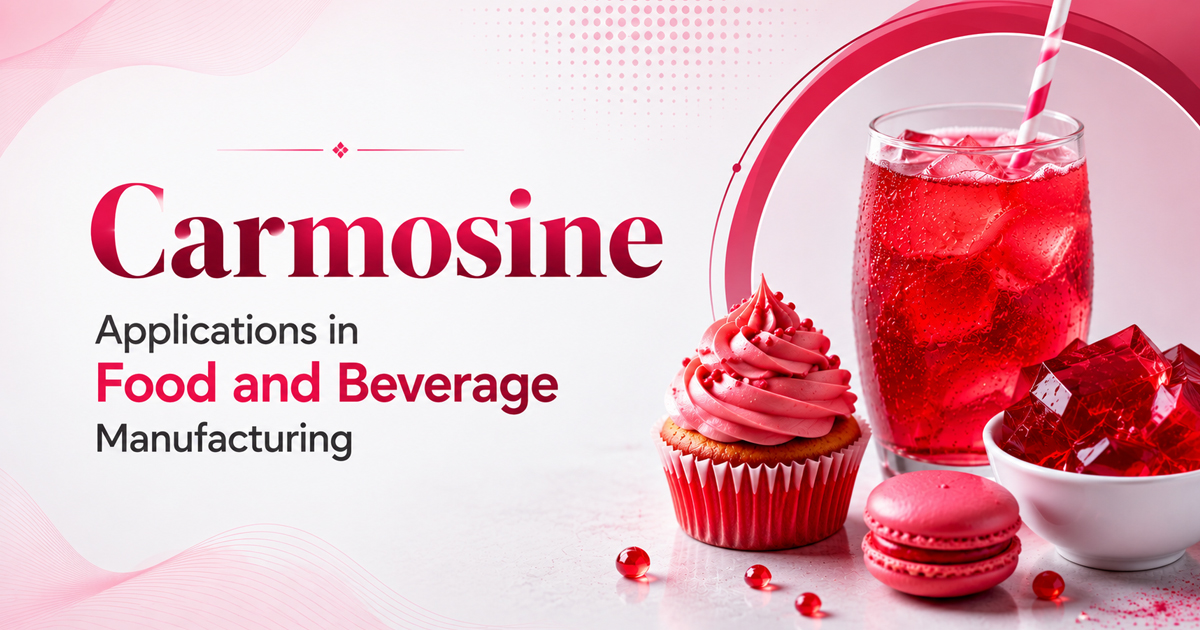
Carmosine Applications in Food and Beverage Manufacturing
Introduction Color is one of the first things consumers notice about food and beverages. A bright red candy, a pink yogurt, or a colorful drink creates expectations about flavor and freshness before the first bite or sip. Because of this, food manufacturers use food colors to create consistent and attractive products. Among the commonly used synthetic food colors is Carmosine, also known as Azorubine (INS 122 or E122). It is a synthetic red color widely used in many countries for selected food and beverage applications. Carmosine provides a stable red to maroon shade and performs well in products that require consistent color during processing and storage. However, its use is not universal. Carmosine is approved in many regions, including the European Union, the United Kingdom, India, Australia, and several other countries. Still, it is not approved for use in foods by the U.S. Food and Drug Administration (FDA). Manufacturers should always verify the regulations of the country where the finished product will be sold. This article explains the major applications of Carmosine in food and beverage manufacturing, its advantages, limitations, and regulatory considerations. What Is Carmosine? Carmosine is a synthetic azo food dye produced through chemical synthesis. It is water-soluble
Carmosine Applications in Food and Beverage Manufacturing Read More