Introduction
Color is one of the first things consumers notice about food and beverages. A bright red candy, a pink yogurt, or a colorful drink creates expectations about flavor and freshness before the first bite or sip. Because of this, food manufacturers use food colors to create consistent and attractive products.
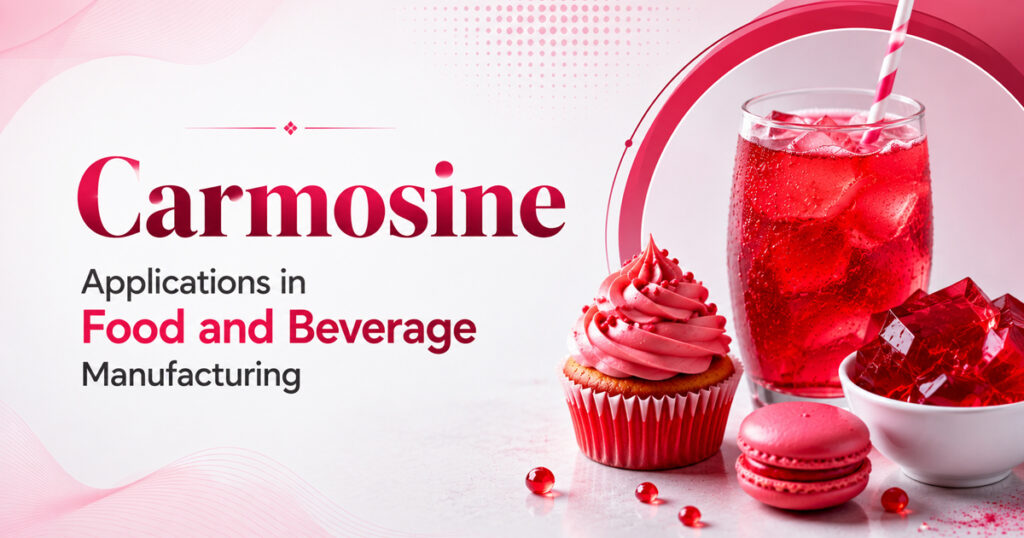
Among the commonly used synthetic food colors is Carmosine, also known as Azorubine (INS 122 or E122). It is a synthetic red color widely used in many countries for selected food and beverage applications. Carmosine provides a stable red to maroon shade and performs well in products that require consistent color during processing and storage.
However, its use is not universal. Carmosine is approved in many regions, including the European Union, the United Kingdom, India, Australia, and several other countries. Still, it is not approved for use in foods by the U.S. Food and Drug Administration (FDA). Manufacturers should always verify the regulations of the country where the finished product will be sold.
This article explains the major applications of Carmosine in food and beverage manufacturing, its advantages, limitations, and regulatory considerations.
What Is Carmosine?
Carmosine is a synthetic azo food dye produced through chemical synthesis. It is water-soluble and creates shades ranging from bright red to dark red depending on the formulation and concentration.
It is commonly identified as:
- Carmosine
- Azorubine
- INS 122
- E122 (European Union)
Manufacturers choose Carmosine because it offers reliable color consistency, good water solubility, and stability under many processing conditions.
Carmosine Applications in Food Manufacturing
Carmosine is used in various food categories where regulations permit its use.
1. Confectionery Products
One of the largest applications is confectionery manufacturing.
Common examples include:
- Hard candies
- Soft candies
- Gummies
- Chewing gum
- Jelly sweets
- Marshmallows
Carmosine helps manufacturers achieve attractive red and pink shades while maintaining color consistency across production batches.
2. Bakery Products
Certain bakery products use Carmosine to improve visual appeal.
Applications may include:
- Cake decorations
- Icings
- Frostings
- Decorative fillings
- Dessert toppings
The dye can also be blended with other approved food colors to produce different shades.
3. Dairy Products
Several dairy-based products use Carmosine where local regulations allow.
Examples include:
- Flavored yogurt
- Dairy desserts
- Ice cream
- Frozen desserts
- Milk-based sweets
Its water solubility allows it to disperse evenly throughout the product.
4. Dessert Mixes
Manufacturers may use Carmosine in prepared dessert products such as:
- Jelly mixes
- Custard powders
- Instant dessert mixes
- Pudding preparations
The color remains relatively stable during normal preparation.
Carmosine Applications in Beverage Manufacturing
Beverage manufacturers use Carmosine to produce appealing red shades in selected drinks.
Typical applications include:
- Fruit-flavored beverages
- Soft drinks (where permitted)
- Concentrated beverage syrups
- Powdered drink mixes
- Flavored beverage preparations
The dye dissolves easily in water, making it suitable for liquid formulations.
Why Food Manufacturers Choose Carmosine
Manufacturers continue using Carmosine in approved markets because it offers several practical advantages.
Good Color Stability
Carmosine generally maintains its color during manufacturing, packaging, and storage when used under recommended conditions.
Water Solubility
Its high water solubility allows easy mixing into liquid and semi-liquid food products.
Batch-to-Batch Consistency
Synthetic colors typically provide more consistent shades than many natural colors, helping manufacturers maintain product appearance across production batches.
Cost Efficiency
Compared with some natural color alternatives, Carmosine can provide consistent performance at a competitive cost, although ingredient cost is only one factor in formulation decisions.

Important Regulatory Considerations
Food color regulations differ significantly between countries.
Some important points include:
- Carmosine is permitted in many countries under specified maximum usage limits.
- It is commonly listed as E122 in the European Union.
- It is identified as INS 122 under the Codex Alimentarius system.
- The U.S. FDA does not approve Carmosine for use in foods. Manufacturers selling products in the United States must use FDA-approved color additives instead.
- Regulations may change over time, so manufacturers should verify the latest requirements before commercial production.
Manufacturers should also follow country-specific labeling requirements wherever Carmosine is permitted.
Factors Manufacturers Should Consider
Selecting a food color involves more than achieving the desired shade.
Manufacturers typically evaluate:
- Target export markets
- Regulatory compliance
- Product formulation
- Processing conditions
- Shelf-life requirements
- Consumer preferences
- Labeling requirements
- Compatibility with other ingredients
For companies exporting internationally, using different color formulations for different markets may be necessary due to varying regulations.
Choosing a Reliable Food Color Manufacturer
Consistent product quality starts with selecting a dependable supplier.
When evaluating food color manufacturers, consider:
- Consistent manufacturing quality
- Regulatory documentation
- Batch consistency
- Product traceability
- Technical support
- Reliable supply chain
- Compliance with applicable food safety standards
Working with an experienced supplier can help reduce formulation challenges and support regulatory compliance.
Conclusion
Carmosine remains an important synthetic food color for manufacturers in countries where it is approved. Its good water solubility, consistent color performance, and stability make it suitable for confectionery, bakery products, dairy products, desserts, and selected beverages.
At the same time, manufacturers should remember that food color regulations vary by market. Carmosine is not approved for use in foods in the United States, making regulatory review an essential part of product development for companies serving international customers.
If you are looking for an experienced food color manufacturer, choose a supplier that offers consistent quality, technical expertise, and documentation to help meet the regulatory requirements of your target markets.
FAQs
No. Carmosine is a synthetic azo food dye produced through chemical synthesis.
It is commonly used in confectionery, bakery products, dairy products, desserts, and selected beverages where regulations permit.
No. Carmosine is not approved by the U.S. FDA for use in foods.
There is no difference. E122 is the European food additive number for Carmosine, also known as Azorubine.
Manufacturers use it because it provides consistent red shades, dissolves easily in water, and performs well in many food processing applications where it is legally permitted.