Dyes

Explore our range of premium dyes designed for textiles, food, and industrial use. Vibrant, eco-friendly, and reliable solutions for all your dyeing needs.

Choosing a reliable food color manufacturer
Dyes, Food Colors

Common Mistakes Buyers Make When Sourcing Ponceau 4R

Introduction Buying Ponceau 4R may look simple, but choosing the wrong supplier can lead to quality issues, shipment delays, compliance problems, and higher production costs. Whether you manufacture beverages, confectionery, bakery products, dairy products, or processed foods, the quality of your food color directly affects the final product. Many buyers focus only on price. While cost is important, it should never be the only factor when selecting a supplier. A lower-priced product may not meet quality standards, may vary from batch to batch, or may not have the required documentation for your market. This guide explains the most common mistakes buyers make when sourcing Ponceau 4R and how working with experienced food color manufacturers can help reduce risks. 1. Choosing Price Over Quality One of the biggest sourcing mistakes is selecting the lowest quotation without checking product quality. Lower prices can sometimes mean: Lower purity Inconsistent color strength Poor batch consistency Limited quality testing Inadequate documentation A small saving on raw material can become expensive if the finished product fails quality checks or customer expectations. Instead of comparing only prices, compare the overall value offered by different food color manufacturers, including testing, certifications, technical support, and supply reliability. 2. Not…

Common Mistakes Buyers Make When Sourcing Ponceau 4R Read More

Global Sulforhodamine market trends
Dyes

Global Market Trends for Sulforhodamine

Introduction Sulforhodamine is a synthetic fluorescent dye widely used in scientific research, diagnostics, environmental studies, and industrial applications. While it is not produced in the same volumes as textile dyes or food colors, it plays an important role in laboratories, pharmaceutical research, biotechnology, and analytical testing. The global market for Sulforhodamine is growing steadily because of increased investments in life sciences, medical research, and quality testing. At the same time, manufacturers are facing stricter quality standards, changing environmental regulations, and higher customer expectations for purity and consistency. For dyes manufacturers in India, this market presents opportunities, but it also requires continuous improvement in manufacturing practices, quality control, and regulatory compliance. Understanding the Sulforhodamine Market Sulforhodamine belongs to the family of xanthene dyes and is known for its bright fluorescence and excellent water solubility. It is commonly selected for applications that require reliable fluorescent labeling or tracing. Major industries using Sulforhodamine include: Biotechnology Pharmaceutical research Clinical diagnostics Environmental monitoring Academic laboratories Chemical research Industrial testing Unlike conventional industrial dyes, demand for Sulforhodamine is driven more by research and healthcare activities than by consumer markets. Current Global Market Trends 1. Growth in Life Science Research One of the strongest drivers of Sulforhodamine

Global Market Trends for Sulforhodamine Read More

Quinoline Yellow WS technical specifications guide, Quinoline Yellow WS water soluble yellow dye, Dyes manufacturers in India producing Quinoline Yellow WS
Dyes, Food Colors

Technical Specifications Every Buyer Should Know Before Purchasing Quinoline Yellow WS

Introduction Buying Quinoline Yellow WS is not as simple as comparing prices. The same product name can vary in purity, shade, stability, and performance depending on how it is manufactured and tested. Choosing a supplier based only on cost can lead to inconsistent product quality, production delays, or failed quality checks. Whether you manufacture food products, pharmaceuticals, cosmetics, or laboratory formulations, understanding the technical specifications of Quinoline Yellow WS helps you make a better purchasing decision. This guide explains the most important specifications buyers should review before placing an order and why they matter in real production environments. What is Quinoline Yellow WS? Quinoline Yellow WS is a synthetic, water-soluble yellow dye widely used to provide bright yellow shades in approved applications. It dissolves easily in water and offers consistent coloring when manufactured under controlled quality standards.Because different industries have different quality requirements, buyers should always request technical documents instead of assuming that every supplier offers the same product.  Why Technical Specifications Matter A supplier may advertise Quinoline Yellow WS, but without reviewing the specifications, it is difficult to know whether the material is suitable for your application.  Technical specifications help buyers evaluate: Product consistency Manufacturing quality Batch-to-batch uniformity Regulatory

Technical Specifications Every Buyer Should Know Before Purchasing Quinoline Yellow WS Read More

Dyes

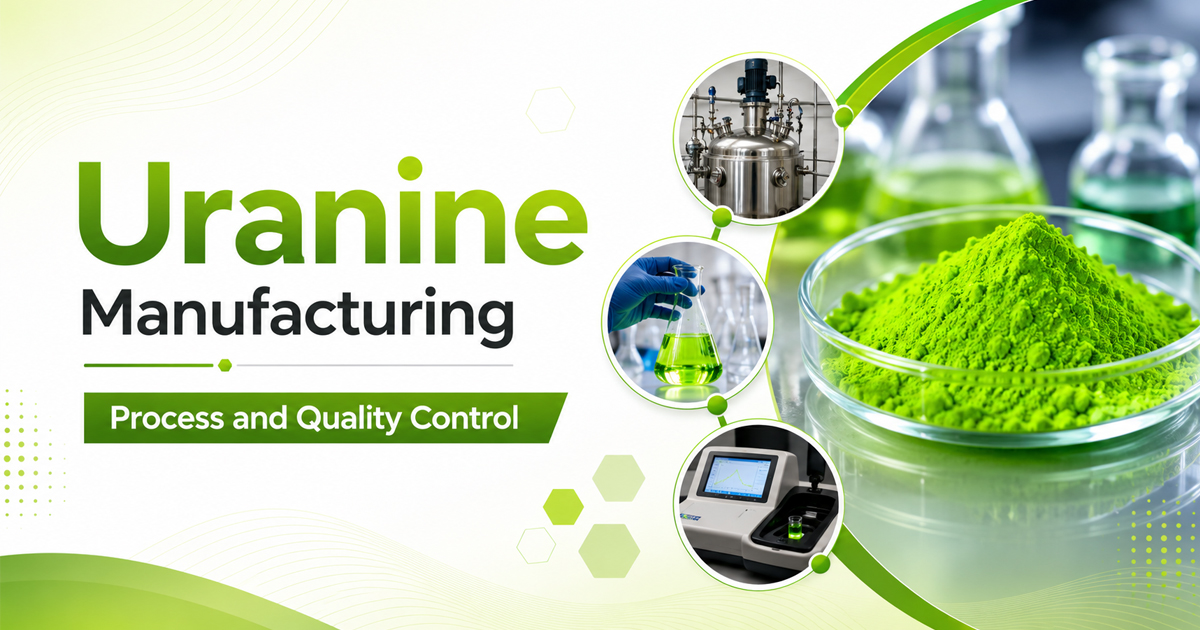
Uranine Manufacturing Process and Quality Control Guide

Introduction Uranine, also known as sodium fluorescein, is a bright yellow-green fluorescent dye used across multiple industries. It is widely used in water tracing, leak detection, medical diagnostics, laboratory research, and industrial testing because of its high visibility and excellent fluorescent properties. For manufacturers and industrial buyers, product quality is just as important as performance. A small variation in purity, particle size, or fluorescence can affect the final application. This is why experienced dyestuff manufacturers invest heavily in quality control throughout the production process. In this guide, we explain how uranine is manufactured, the quality checks performed during production, and what buyers should consider when choosing a reliable supplier. What Is Uranine? Uranine is the sodium salt of fluorescein. It dissolves easily in water and produces an intense green fluorescence when exposed to ultraviolet or blue light. Common applications include: Water flow tracing Leak detection Environmental monitoring Medical diagnostics Laboratory research Industrial inspection Hydraulic testing Its excellent water solubility and strong fluorescence make it one of the most commonly used fluorescent tracer dyes. Uranine Manufacturing Process The exact manufacturing process varies among manufacturers, and many production details are proprietary. However, reputable dyes manufacturers in India generally follow a controlled production

Uranine Manufacturing Process and Quality Control Guide Read More

The Rise of Sustainable Water-Based Colorants in Modern Cosmetics
Dyes, Pigments

The Rise of Sustainable Water-Based Colorants in Modern Cosmetics

The beauty industry is undergoing a remarkable transformation. As consumers pay more attention to their skincare and makeup products, they want eco-friendly, safe, and sustainable colorants. Among these, water-based colorants are emerging as a game-changer for modern cosmetics. Today, top color cosmetics makers in India are shifting from heavy synthetic pigments. They are now using natural and water-based options. This shift not only benefits the environment but also enhances product safety, performance, and overall quality. The Shift Toward Sustainable Cosmetic Formulations Traditionally, cosmetic colorants relied heavily on solvent-based dyes, which often posed environmental and skin-sensitivity concerns. Now, dyestuff manufacturers in India are pioneering water-based formulations that reduce toxic emissions and improve biodegradability. These innovations align perfectly with global trends toward clean beauty — a movement that promotes transparency, sustainability, and wellness. For companies in the cosmetics, food, and pharmaceutical sectors, this shift marks a new era of responsible manufacturing. What Makes Water-Based Colorants Special? Water-based colorants stand out for their safety, versatility, and sustainability. Unlike solvent-based alternatives, they are free from harmful chemicals and produce minimal waste. This makes them ideal for use in products like lipsticks, foundations, eyeshadows, and skincare formulations. Here’s why manufacturers prefer them: Eco-friendly & Biodegradable:

The Rise of Sustainable Water-Based Colorants in Modern Cosmetics Read More

FD&C Certified Dyes and Lake Pigments: Safety, Uses & Industry Applications
Dyes, Pigments

FD&C Certified Dyes and Lake Pigments: Safety, Uses & Industry Applications

FD&C (Food, Drugs, and Cosmetics) and D&C (Drugs & Cosmetics) dyes and lakes, known as synthetic or certified colors, are commonly used to impart color to a wide range of cosmetic products. FD&C dyes and lakes that meet all the FDA’s stringent colorant standards for cosmetics can be blended to meet your requirements. This blog will discuss FD&C dyes and lake pigments to ensure a smooth transition for sustainable business growth.  D&C and FD&C colors are water-soluble dyes and share the same characteristics as the aluminum lakes that correspond to them more efficiently. Each FD&C and D&C dye batch must be submitted to the FDA for testing to ensure it meets strict government requirements.  Whether you’re a business or individual professional wondering about the FD&C dyes and FD&C pigments in cosmetics, you have come to the right place. So, without any further ado, let’s dive right in! What are FD&C dyes? FD&C dyes and lake pigments, also known as artificial or FDA-certified colors, are widely used in food, drugs, and cosmetics. They are water-soluble chemicals that produce color when dissolved in water.  Additionally, FD&C colors or dyes are generally found in granular form and can be used as a color

FD&C Certified Dyes and Lake Pigments: Safety, Uses & Industry Applications Read More

How Erythrosine is Made: A Simple Step-by-Step Guide
Dyes

How Erythrosine is Made: A Simple Step-by-Step Guide

Introduction: Erythrosine, Red No. 3 or E127, is a synthetic red dye used in foods, cosmetics, and pharmaceuticals. Its bright pink hue is familiar in candies, cake decorations, and dental products. Chemists make the dye through a chemical process that involves several steps. Step 1: Creating Fluorescein The process begins with two basic chemicals: phthalic anhydride and resorcinol. When chemists heat these substances, they create fluorescein, a yellow-green compound that is the base for erythrosine. Step 2: Adding Iodine to Form Erythrosine Next, fluorescein undergoes iodination, which means it reacts with iodine and potassium iodide. This reaction replaces some hydrogen in fluorescein with iodine atoms, creating an erythrosine red compound. Read More: What Is Erythrosine: Are They Safe For Humans? Step 3: Stabilizing for Use in Products Erythrosine is often converted into its disodium salt form to make it suitable for use in various products. This form dissolves easily in water, making it ideal for use in foods and beverages. In acidic environments, chemists stabilize erythrosine with specific surfactants to keep it evenly distributed and prevent it from settling. Read More: Use and Application for Erythrosine? Conclusion Erythrosine is a product of careful chemical synthesis, transforming simple starting materials into

How Erythrosine is Made: A Simple Step-by-Step Guide Read More

nderstanding_the_Fundamentals_of_Dyes_and_Pigments-1.jpg
Dyes, Pigments

Understanding the Fundamentals of Dyes and Pigments

Both dyes and pigments are fundamentally different from each other, but their main purpose is to provide colors to colorless products to enhance their visual appearance. The dyes and pigments industry is huge creating a positive impact on society with lots of colors, shades, or hues. This article will walk you through the core fundamentals of dyes and pigments. Dyes and pigments are also capable of dissolving, forming solutions and chemically bonding with parts in addition to destroying crystal structures temporarily. The primary use of organic dyes is to provide color and are typically applied to enhance visual appearance, identification, branding, and more.  Dye compounds begin to function once they are dissolved in aqueous solutions. Dyestuff is another name for colored dyes. They have a variety of applications and are known as dyestuff.  Without any further ado, let’s dive right in! What Are Dyes? Dyes are colored substances that impart color to enhance the visual appearance of products or add color to colorless products. In other words, dyes refer to colored compounds that can be used to impart color to various substances, including paper, fabrics, hair, and food.  The use of dyes is widespread in different industry verticals, ranging from food,

Understanding the Fundamentals of Dyes and Pigments Read More

18-Safe_Versatile_Water_Soluble_Dyes_for_Every_Industry
Dyes

Safe & Versatile Water-Soluble Dyes for Every Industry

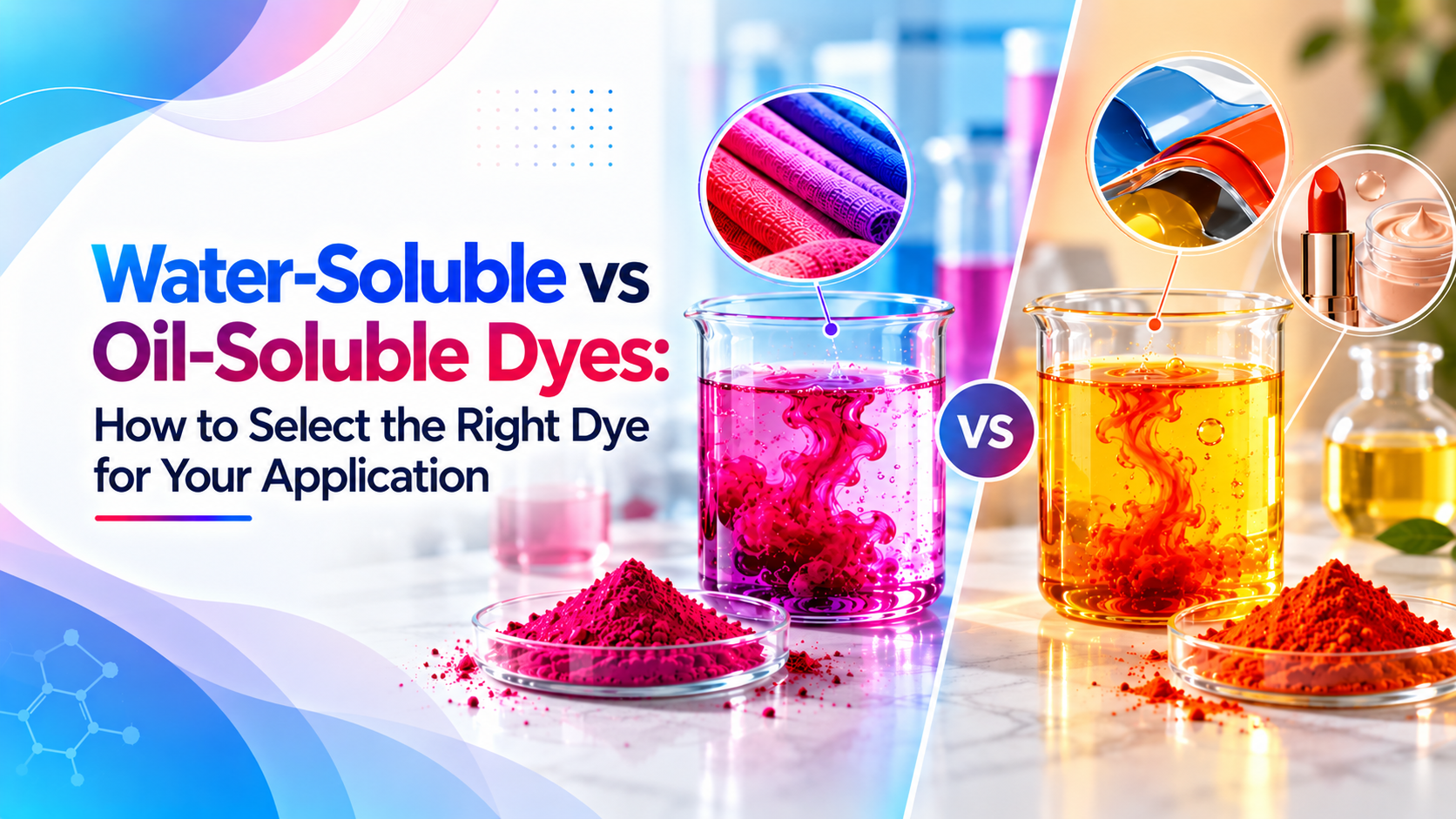
Water-soluble dye refers to a dye or pigment that can be dissolved in water directly without needing any binder or medium, ensuring clean, transparent water with zero impurities. There is a wide range of high concentrations of water-soluble and customized dyes that are easier to blend with brilliant shades and high color strength to obtain desired products.  All right! In this article, we will discuss everything you need to know about water-soluble dyes or coloring agents used in pharmaceuticals. Solvent Green 7 is an example of a water-soluble dye widely used in fluorescent inks, fluorescent marker pens, hand sanitizer, antifreeze, cutting fluid, aqueous ink, shampoo, soap, water chest, greases, aqueous materials, cosmetics, lubricating oil, etc.  There are various uses of fluorescent dyes in foods, pharmaceuticals, and cosmetics. Are you a business or an individual professional wondering about water-soluble dyes for pharmaceuticals, continue reading this further. What Are Water Soluble Dyes? Water-soluble dyes are colors, colorants, or coloring agents that can be dissolved easily in water or other solvents. They can be used in liquid form and offer more vibrant, bright colors for efficiently coloring a comprehensive range of products.  A lot of companies today use water-soluble dyes to enhance the visual appearance of

Safe & Versatile Water-Soluble Dyes for Every Industry Read More

Scroll to Top