Synthetic Dyes

Top Quality Parameters to Evaluate Before Buying Synthetic Dyes
Synthetic Dyes

Top Quality Parameters to Evaluate Before Buying Synthetic Dyes

Introduction Buying synthetic dyes based only on price, shade, or supplier reputation can create problems later. A dye may look right in a sample but perform differently during production. Poor color strength, unwanted impurities, low solubility, inconsistent batches, or missing regulatory documents can lead to reprocessing, product rejection, and higher production costs.  The right approach is to evaluate the dye against clear technical and application requirements before placing a large order. Synthetic dyes are used across textiles, paper, plastics, inks, coatings, detergents, cosmetics, and other industries. The quality parameters that matter can differ by application, so no single specification works for every dye. Here are the main factors buyers should check before purchasing synthetic dyes. 1. Chemical Identity and Purity The first step is confirming that the supplied material is the specified dye. Ask the supplier for the exact chemical name, Color Index name or number where applicable, CAS number, molecular information, and product specification. Purity should also be clearly defined using an appropriate analytical method. For regulated color additives in the United States, identity and purity are not optional considerations. FDA regulations specify requirements for approved color additives, and certain synthetic colors must undergo batch certification. FDA testing can…

Top Quality Parameters to Evaluate Before Buying Synthetic Dyes Read More

Alizurol Purple Procurement Checklist for Bulk Buyers
Synthetic Dyes

Alizurol Purple Procurement Checklist for Bulk Buyers

Introduction Buying Alizurol Purple in bulk requires more than comparing price and pack size. For cosmetic, pharmaceutical, or other regulated applications, the wrong grade can create problems with formulation, testing, documentation, and market compliance.  There is also an important naming issue. Alizurol Purple can refer to different anthraquinone colorants in industry sources. For example, the FDA identifies Alizurol Purple with D&C Violet No. 2, CAS 81-48-1 and CI 60725. Other technical sources identify Alizurol Purple as Ext. D&C Violet No. 2, CAS 4430-18-6 and CI 60730. For this reason, bulk buyers should confirm the exact identity before requesting samples or placing a purchase order. Alizurol Purple Bulk Procurement Checklist 1. Confirm the Exact Product Identity Do not approve a supplier based only on the name “Alizurol Purple.” Ask the supplier to provide: Chemical name CAS number Color Index number Molecular formula and molecular weight Product grade Country of manufacture Intended application For example, FDA records list D&C Violet No. 2 as CAS 81-48-1 and identify Alizurol Purple among its other names. If a supplier gives you a different CAS or CI number, do not assume it is an equivalent product. Investigate the difference first. 2. Check the Regulatory Status Regulatory

Alizurol Purple Procurement Checklist for Bulk Buyers Read More

08-Top_Synthetic_Food_Dyes_and_Their_Common_Uses-1.jpg
Synthetic Dyes

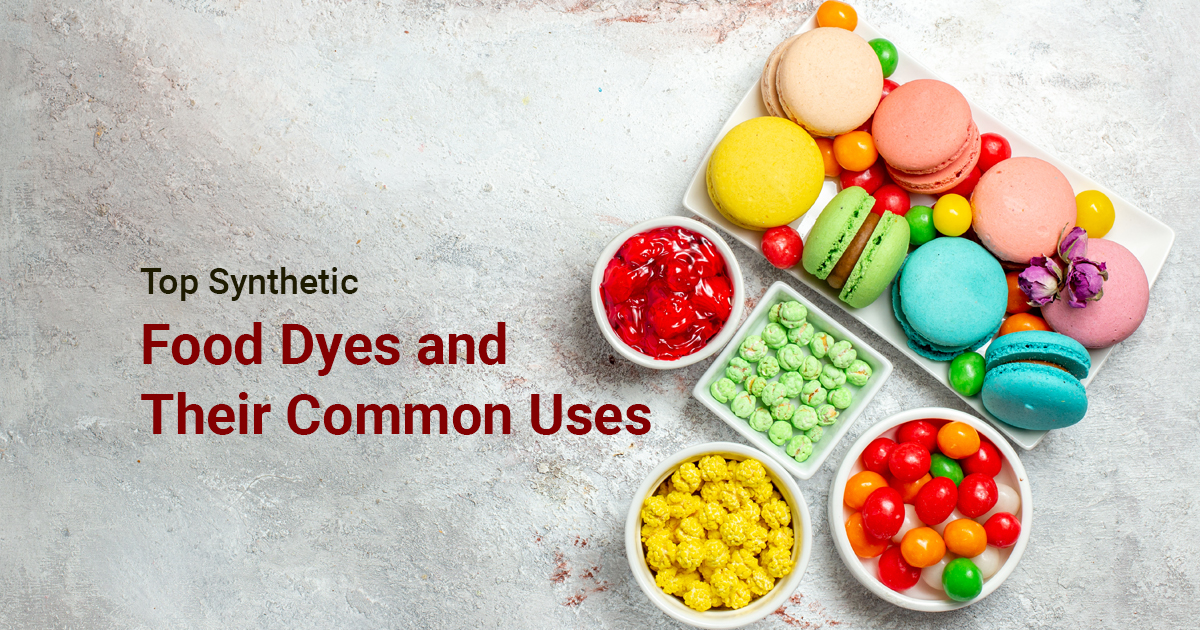
Top Synthetic Food Dyes and Their Common Uses

The most common synthetic food dyes are Red No. 40, Yellow No. 5, and Yellow No. 6, which are commonly used in food, drugs, or cosmetics. Synthetic food dye refers to any dye, pigment, or other substance that provides color to food, drugs, or cosmetics. Synthetic food color additives are important components of many products, making them attractive, appealing, appetizing, and informative.  In this blog, we will discuss the most common synthetic food dyes, including their uses and benefits.  The primary purpose of artificial food dyes is to provide different colors with various hues and shades to make products more appealing and attractive to consumers. The U.S. FDA monitors synthetic food dyes or color additives to ensure proper use and as directed on the label.  Whether you’re a business or an individual professional thinking about the most common synthetic food dyes, continue reading this blog. What Are Synthetic Food Dyes? Synthetic food dyes, also known as color additives, colors, or synthetic colors, are derived from coal-tar or petroleum-based chemicals and are used to make food, drugs, and cosmetics more appealing.  The most common synthetic food dyes are color additives widely used in a variety of applications, including drugs, cosmetics, and pharmaceutical dosage forms.  Types of Synthetic

Top Synthetic Food Dyes and Their Common Uses Read More

17-Certified_Synthetic_Colors_A_Guide_to_Their_Uses_and_Benefits
Synthetic Dyes

Certified Synthetic Colors: A Guide to Their Uses and Benefits

Certified synthetic colors, or artificial colors, are used to color food and beverage products for various industrial applications. These synthetic colors are derived from coal-tar and petroleum-based chemicals. This blog post will walk you through the top 5 certified synthetic colors for food & beverage products.  Sunset yellow, brilliant blue, allura red, brilliant blue, and indigo carmine are a few examples of top-certified synthetic colors. The importance of synthetic dyes or colors are popular because they are less expensive and provide a more effective intense and vibrant color. Synthetic dyes are best known for providing a comprehensive range of dyes and hues.  Whether you are a business owner or an individual professional wondering about the top 5 certified synthetic colors for food & beverage products, continue reading this blog further. What are Certified Synthetic Colors? Certified synthetic colors, known as certified color additives, colorants, or coloring agents derived from coal tar and chemical reactions approved by the FDA for use in food, drugs, and cosmetics. The US FDA regulates the use of certified synthetic colors or permitted synthetic dyes to ensure they meet rigorous testing and quality standards.   A color additive is any dye, pigment, or other substance used to impart color to foods,

Certified Synthetic Colors: A Guide to Their Uses and Benefits Read More

Food Color Additives: What They Are and How They’re Used
Synthetic Dyes

Food Color Additives: What They Are and How They’re Used

Color additives are colors, colorants, or coloring agents widely used to impart color to different food & beverage products, making them more appealing to consumers. A color additive is any dye, pigment, or other substance for coloring food, drugs, or cosmetics. In this blog, we will discuss what are color additives in the food industry.  There’s a long history of food color additives as they have been used for centuries. Color additives are essential components of numerous products, making them more appealing, attractive, and appetizing than ever before. In addition to identifying candy flavors, medicine dosages, and left and right contact lenses on sight added color acts as a code.  Regarding the safety and appropriate use of color additives, the Food and Drug Administration (FDA) has an important role in this area. Whether you’re a business or an individual professional wondering what color additives are used in the food industry, you have come to the right place. What Are Color Additives? Color additives refer to any substances used to provide color to foods, drugs, or pharmaceuticals. The US FDA regulates and monitors the use of food color additives used in various industrial applications. These color additives are derived from natural sources for

Food Color Additives: What They Are and How They’re Used Read More

Permitted Synthetic Dyes: Everything You Need to Know
Synthetic Dyes

Permitted Synthetic Dyes: Everything You Need to Know

Permitted synthetic dyes are chemicals derived from coal-tar and petroleum-based chemicals used in foods, drugs, and cosmetics. The Food, Drug, and Cosmetics Act (FD&C Act) requires food colors or colorants to be tested for purity and to contain no specific contaminants within legal limits. In this blog post, we will walk you through the permitted synthetic dyes.  The use of permitted synthetic colors is regulated and monitored under the U.S. FDA Act to ensure product quality and efficacy. Permitted synthetic dyes or colors that are not permitted or colors that are used randomly can negatively affect humans and animals. These synthetic dyes are also known as certified synthetic colors or dyes most commonly used in cosmetics, foods, and pharmaceuticals.  Whether you’re a business or individual professional still wondering what are permitted synthetic dyes and need more information on the usage of synthetic dyes, continue reading this blog further. What are Permitted Synthetic Dyes? Permitted synthetic food dyes include Yellow dyes (Tartrazine, Sunset Yellow FCF), Blue dyes (Indigo Carmine, Brilliant Blue FCF), Red dyes (Ponceau 4R, Azorubine, Erythrosine), and the Green dye Fast Green FCF. These synthetic dyes must meet the requirements of the US FDA, EFSA, and FSSAI, and be pure and

Permitted Synthetic Dyes: Everything You Need to Know Read More

Synthetic Dyes

Synthetic Dyes Explained: Revolutionizing Color in Industry

Synthetic dyes are chemical compounds derived from coal tar or petroleum-based chemicals in a well-designed laboratory. Synthetic dyes and chemicals are rapidly increasing due to their powerful capabilities to produce more vibrant, bright colors, making the product more appealing, attractive, and pleasing to consumers. In this blog, we will talk about synthetic dyes and explore their various applications in different industries.  Synthetic dyes are used for food coloring due to their several advantages and chemical properties, which enhance the overall look and feel of food items. They are also widely used in various industrial applications, including drugs, cosmetics, textiles, plastics, and more, to enhance the visual appearance of products.  Synthetic dyes are popular worldwide due to their cost-effectiveness, ease of use, wide range of color variables, durability, and greater shelf life value. Artificial dyes are certified and tested under a rigorous testing process set by the U.S. FDA and EFSA to ensure the safety and proper use in various applications.  If you’re wondering about synthetic dyes and their advantages and disadvantages, continue reading this blog.  Understanding Dyes What are dyes? How are dyes obtained? You often think about that when it comes to dye. Dyes are chemical substances that impart color to materials

Synthetic Dyes Explained: Revolutionizing Color in Industry Read More

Synthetic dyes used in home and personal care products
Synthetic Dyes

Synthetic dyes used in home and personal care products

Synthetic dyes are widespread for a comprehensive range of industrial applications, including food, pharmaceuticals, cosmetics, and home & personal care products. They are also commonly used in coating & plastic and inkjet & printing dye applications. The primary objective of synthetic dyes is to enhance the visual appearance of a product to make it more appealing and attractive to consumers. The demand for these synthetic dyes or colorants is consistently growing with the increasing perception of people with the colors. More than 90% of people are likely to be attracted to a product and make their purchase decision by seeing its colors or visual appearance. Synthetic dyes or artificial colorants play an important role in improving the overall look and feel of the product. Whether it is food, pharmaceutical, cosmetics, or home & personal care products, you can easily find the uses of synthetic dyes in every product. However, there are certain rules, regulations, and guidelines on the proper use of synthetic dyes to ensure the safety and efficacy of a product. It is the US FDA that regulates, approves, and permits the use of synthetic dyes only when they pass its rigorous testing and quality standards. Cosmetic product manufacturers

Synthetic dyes used in home and personal care products Read More

The Truth About Synthetic Dyes Used for Food Coloring: Are They Safe for Consumption?
Synthetic Dyes

The Truth About Synthetic Dyes Used for Food Coloring: Are They Safe for Consumption?

Food colorings or additives are dyes, pigments, or substances that impart color when added to food or beverages. It’s hard not to put the food in your grocery bag or eat it right away when you step into the market – making food vibrant and more appealing. In this article, we will talk about synthetic dyes used for food coloring. If you’re wondering what are food dyes and how safe they are, you are in the right place. You can find food coloring everywhere whether you’re cooking at home or in a commercial kitchen. The products range from liquids to powders to gels to pastes. In addition to cosmetics, food colorants are used in many other applications, including medical devices, pharmaceuticals, and home craft projects. Food colors play an important role in the visual presentation of food, which is one of the most powerful effects of their use. Some food colors and flavors have been approved for consumption by the U.S. FDA and FSSAI (Food Safety and Standards Authority of India). Let’s dive into the different types of food dyes used for food coloring. Importance Of Colors in Foods? Color can affect how people perceive food flavors in anything from

The Truth About Synthetic Dyes Used for Food Coloring: Are They Safe for Consumption? Read More

Scroll to Top