Pigments

Pigments are substances that reflect certain light wavelengths, creating visible colors. Used in art, textiles, and more, pigments add vibrancy and durability to materials we see every day.

Cosmetic Colors, Cosmetic Dyes, Dyes, Food Colors, Food dyes, Inkjet & Printing Dyes, Natural Dyes, Personal & Home Care Colors, Pharmaceutical Colors, Pharmaceutical Dyes, Pigments, Synthetic Dyes

How Pharmaceutical Colors Ensure Safety and Compliance

Pharmaceutical colors are more than just visual enhancements—they are critical for patient safety and compliance. By helping patients distinguish medications and ensuring accurate dosing, these colors directly impact health outcomes. Leading Pharmaceutical Colors Manufacturing Company and pharmaceutical color manufacturers in India supply safe, high-quality, and consistent colors that comply with international standards. Why Pharmaceutical Colors Matter Colors in medicines are essential for: Identification of drugs: Clear visual distinction prevents mix-ups. Error reduction: Distinguishable colors reduce dosage mistakes. Brand recognition: Unique color patterns help pharmaceutical brands stand out. Top dyestuff manufacturers in India, plastic dye manufacturers in India, and food color manufacturers in India now focus on producing pharmaceutical-grade colors. People commonly utilize water-based colorants to ensure safety and sustainability. Colors and Patient Safety Patient safety is the top priority in healthcare. Pharmaceutical colors contribute by: Minimizing medication errors with clear differentiation Supporting visually impaired patients in identifying medicines Maintaining consistent quality across production batches Working with reputable pharmaceutical color manufacturers ensures that every tablet or capsule meets strict safety regulations. Colors and Patient Compliance Patient compliance increases when medicines are easy to recognize and appealing: Vibrant and distinct colors make medicines easier to remember Helps patients follow complex dosing schedules…

How Pharmaceutical Colors Ensure Safety and Compliance Read More

Dyes, Pigments

FD&C Certified Dyes and Lake Pigments: Safety, Uses & Industry Applications

FD&C (Food, Drugs, and Cosmetics) and D&C (Drugs & Cosmetics) dyes and lakes, known as synthetic or certified colors, are commonly used to impart color to a wide range of cosmetic products. FD&C dyes and lakes that meet all the FDA’s stringent colorant standards for cosmetics can be blended to meet your requirements. This blog will discuss FD&C dyes and lake pigments to ensure a smooth transition for sustainable business growth.  D&C and FD&C colors are water-soluble dyes and share the same characteristics as the aluminum lakes that correspond to them more efficiently. Each FD&C and D&C dye batch must be submitted to the FDA for testing to ensure it meets strict government requirements.  Whether you’re a business or individual professional wondering about the FD&C dyes and FD&C pigments in cosmetics, you have come to the right place. So, without any further ado, let’s dive right in! What are FD&C dyes? FD&C dyes and lake pigments, also known as artificial or FDA-certified colors, are widely used in food, drugs, and cosmetics. They are water-soluble chemicals that produce color when dissolved in water.  Additionally, FD&C colors or dyes are generally found in granular form and can be used as a color

FD&C Certified Dyes and Lake Pigments: Safety, Uses & Industry Applications Read More

Cosmetic Dyes, Pigments

FD&C Pigments in Cosmetics: Uses, Safety & Benefits

Pigments are compounds that impart color when added to any material. They are used in countless industries, including fashion, art, medicine, and computer displays. Pigments are used primarily for industrial applications, including food, fabrics, plastics, cosmetics, inks, food, and paints. This blog will discuss FD&C pigments in cosmetics to ensure quality products for sensitive skin. Every woman uses some kind of color pigments in cosmetics daily, so knowing their color additives is vital. Based on their chemical structures, organic and inorganic pigments can be classified in diversified ways. Inorganic colorants, including iron oxides, chromium, ultramarine, etc., are used to color cosmetics. On the other hand, zinc oxide and titanium dioxide fall under white colorants mainly used in almost every cosmetic. Are you a business or individual professional wondering if FD&C pigments are used in cosmetics, you’re already in the right place. What Are FD&C Colorants? What are FD&C colors or dyes? FD&C colorants, also known as color or color additive refer to a dye, pigment, or any substance certified and approved by the FDA that puts color to food, drug, or cosmetics. Incorporating these additives improves the visual appearance of products with more vibrant and vivid colors making them more appealing, informative, and appetizing.  The

FD&C Pigments in Cosmetics: Uses, Safety & Benefits Read More

Dyes, Pigments

Understanding the Fundamentals of Dyes and Pigments

Both dyes and pigments are fundamentally different from each other, but their main purpose is to provide colors to colorless products to enhance their visual appearance. The dyes and pigments industry is huge creating a positive impact on society with lots of colors, shades, or hues. This article will walk you through the core fundamentals of dyes and pigments. Dyes and pigments are also capable of dissolving, forming solutions and chemically bonding with parts in addition to destroying crystal structures temporarily. The primary use of organic dyes is to provide color and are typically applied to enhance visual appearance, identification, branding, and more.  Dye compounds begin to function once they are dissolved in aqueous solutions. Dyestuff is another name for colored dyes. They have a variety of applications and are known as dyestuff.  Without any further ado, let’s dive right in! What Are Dyes? Dyes are colored substances that impart color to enhance the visual appearance of products or add color to colorless products. In other words, dyes refer to colored compounds that can be used to impart color to various substances, including paper, fabrics, hair, and food.  The use of dyes is widespread in different industry verticals, ranging from food,

Understanding the Fundamentals of Dyes and Pigments Read More

Pigments

What Are Pigments in Food? A Simple Guide to Natural & Synthetic Colors

Synthetic food pigments, also known as dyestuffs or synthetic food dyes impart color to the food, making them more appealing and attractive to consumers’ eyes. Synthetic food pigments are cost-effective, stronger, and longer-lasting than natural pigments identified in various food applications. In this blog, you will learn what pigments are used in food applications. Patent Blue V and Indigo Carmine are a few commercial names for synthetic food pigments. These food pigments are further classified into two major types: azo food pigments and non-azo food pigments. It is more common to categorize them by their predominant shades, for example, yellow, red, and blue pigments. Choosing the right food colors is essential when it comes to coloring food and beverage items.  These pigments are derived from mineral sources, making them the strongest & stable food colorants available. If you’re wondering about color pigments in food, including their uses and benefits, continue reading this blog. What Are Food Pigments? What are synthetic food pigments and why are they used in food and beverage items? Food pigments are chemical dyestuffs that provide color to food products. These pigments could be natural or synthetic and are widely used to enhance the color, taste, and appeal of

What Are Pigments in Food? A Simple Guide to Natural & Synthetic Colors Read More

Pigments

Premium Pigment Colors for Stunning Cosmetics & Personal Care

Pigment colors are widely used to impart color to different cosmetic and personal care products, making them more appealing and attractive to consumers. Pigments offer vibrant hues, facets, and visual allure of numerous colored cosmetic and skin care products. Well! In this blog post, we will walk you through pigment colors for cosmetics and personal care products.  Pigments used for cosmetics offer a wide range of hues and shades. It is fascinating to observe how pigments have evolved over the millennia, displaying the evolution of techniques and materials used by diverse cultures to add color to the world. Using color pigments in cosmetics and skin care products can transform them from simple products into beautiful ones that captivate the senses and leave an indelible impression.  If you are a business or individual entrepreneur wondering about the uses of pigment colors in cosmetics and personal care products, continue reading this blog further. What are Pigment Colors? Pigment colors are colors or color additives that impart a wide range of hues, facets, and shades to make cosmetic and personal care products more appealing, beautiful, and attractive. Generally, the use of a pigment or pigment powder is popular for providing color or changing the visual appearance

Premium Pigment Colors for Stunning Cosmetics & Personal Care Read More

Pigments

Enhance Your Creations with Safe & Vibrant Synthetic Food Pigments

Synthetic food pigments are chemical compounds, also known as dyestuffs produced in labs to impart a stronger, brighter, longer-lasting color than natural pigments. These pigments are most widely used as food color additives to color various products, including pharmaceuticals, cosmetics, and foods. Well! In this blog post, you will learn what are synthetic food pigments and the uses of various types of synthetic food pigments in the industry.  Food pigments provide more vibrant, brighter colors, stable performance, tones, strong fastness, and easy color adjustment. While pigments used for cosmetics are slightly different from pigments used in food and beverage items. These food pigments are cost-effective and are widely used for large production.  As opposed to natural food pigments, synthetic food pigments are more stable and consistent and provide more vibrant color than natural food colors. The U.S. FDA regulates the use of these food pigments to ensure safety and precautions. These pigments are generally safe when used properly. What Are Synthetic Food Pigments? Synthetic food pigments are color pigments derived synthetically in a state-of-the-art laboratory through a well-defined process. These color pigments have greater stability and consistency than their natural counterparts. There is a great difference between organic pigments and inorganic pigments based on their chemical

Enhance Your Creations with Safe & Vibrant Synthetic Food Pigments Read More

Pigments

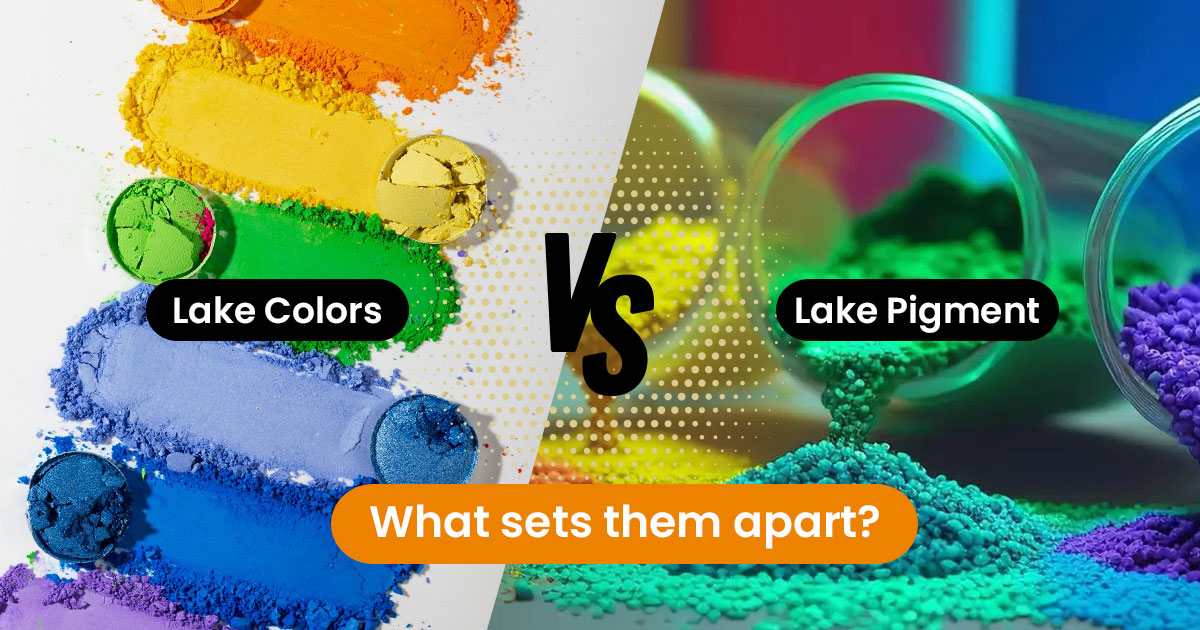
Lake Colors vs. Pigments: What Sets Them Apart?

Lake colors are a type of pigment; however, they are different from other dyes and pigments in a few ways. When selecting between lake colors and pigments, it’s important to consider the application, ingredients, desired texture or color, and other finished product characteristics of both. This blog post will walk you through the difference between lake colors and pigments.  Although lake colors behave similarly to pigments, there are some key differences in how they function. Lakes are bound to a chemical substrate, including calcium, aluminum, talcum, or barium to create insoluble products. Nonetheless, this class of pigments is prone to de-lake-ing and bleeding when used in unsuitable ways.  If you are still wondering what is the key difference between lake colors and pigments, continue reading this blog further.  So, without any further ado, let’s dive right in! What are Lake Colors? Lake colors are pigments that are insoluble in water and are used as food coloring to produce colors, including food, cosmetics, and more. Several salts precipitate together with soluble dyes to create different types of lake colors. As a result, lake colors are manufactured using FD&C dyes, making it easier to mix them with fats, sugars, and oils. FD&C dyes and uses

Lake Colors vs. Pigments: What Sets Them Apart? Read More

Pigments

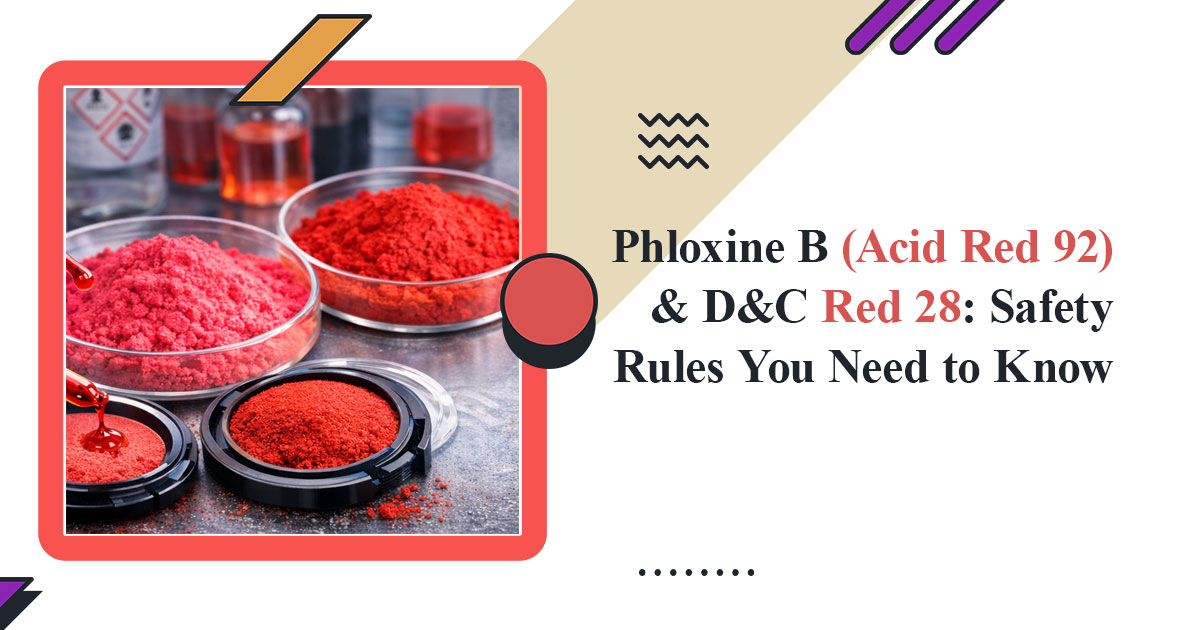
Phloxine B (Acid Red 92) & D&C Red 28: Safety Rules You Need to Know

Phloxine B, also known as phloxine is a water-soluble red dye widely used for coloring cosmetics and drugs in the United States and coloring food in Japan. It is produced from fluorescein, however, it seems different with the presence of four bromine atoms at positions 2, 4, 5, and 7 of the xanthene ring and four chlorine atoms in the carboxyphenyl ring. A maximum absorption wavelength of 540 nm is observed in phenloxine B and a maximum emission wavelength of 564 nm is observed in phenloxine B. In addition to its industrial applications, the antimicrobial substance phloxine B has also been used in biological staining, viability dye, and antiseptic preparations. The effects of Phloxine B, Acid Red 92 are inhibited by chemically damaging xanthene compounds, which are xanthene dyes used as photosensitizers in antimicrobial photodynamic therapy (APDT) to inhibit mycobacterial growth and fungal infection, such as fungal keratitis. The cytoplasm and connective tissue of cells are stained red with hematoxylin-phloxine-saffron (HPS). What is Phloxine B (Acid Red 92)? Phloxine B, also called phloxine and Acid Red 92, is a red, water-soluble dye used for coloring food and beverage items in Japan and drugs and cosmetics in the United States. Fluorescein is the

Phloxine B (Acid Red 92) & D&C Red 28: Safety Rules You Need to Know Read More

Scroll to Top