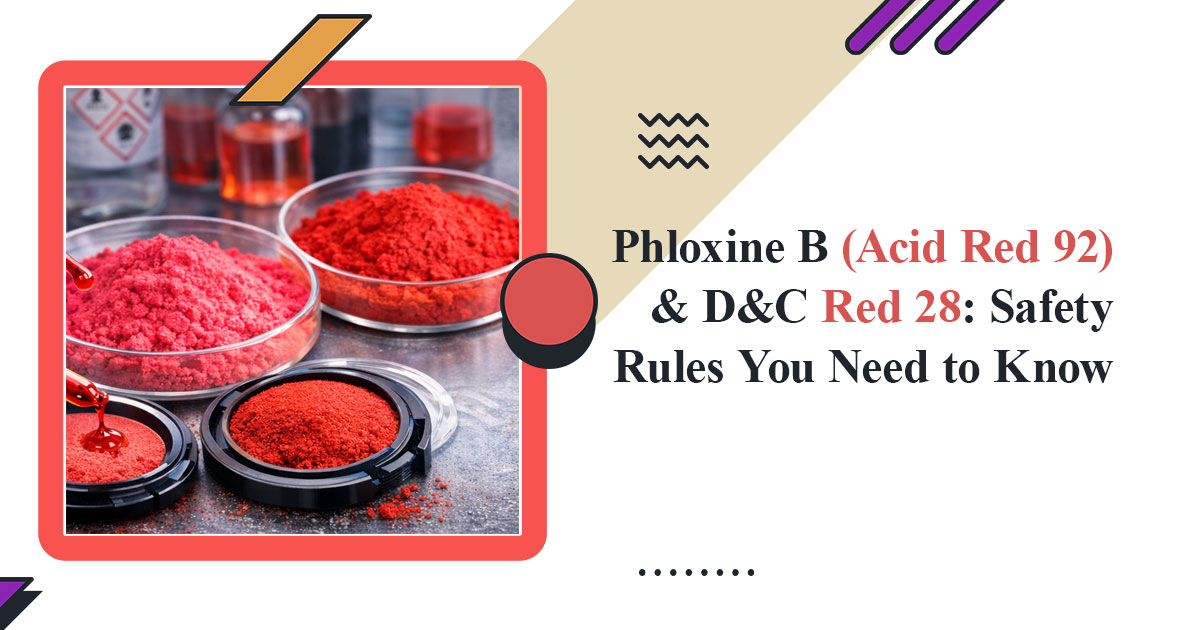
Phloxine B (Acid Red 92) & D&C Red 28: Safety Rules You Need to Know
Phloxine B, also known as phloxine is a water-soluble red dye widely used for coloring cosmetics and drugs in the United States and coloring food in Japan. It is produced from fluorescein, however, it seems different with the presence of four bromine atoms at positions 2, 4, 5, and 7 of the xanthene ring and four chlorine atoms in the carboxyphenyl ring. A maximum absorption wavelength of 540 nm is observed in phenloxine B and a maximum emission wavelength of 564 nm is observed in phenloxine B. In addition to its industrial applications, the antimicrobial substance phloxine B has also been used in biological staining, viability dye, and antiseptic preparations. The effects of Phloxine B, Acid Red 92 are inhibited by chemically damaging xanthene compounds, which are xanthene dyes used as photosensitizers in antimicrobial photodynamic therapy (APDT) to inhibit mycobacterial growth and fungal infection, such as fungal keratitis. The cytoplasm and connective tissue of cells are stained red with hematoxylin-phloxine-saffron (HPS). What is Phloxine B (Acid Red 92)? Phloxine B, also called phloxine and Acid Red 92, is a red, water-soluble dye used for coloring food and beverage items in Japan and drugs and cosmetics in the United States. Fluorescein is the
Phloxine B (Acid Red 92) & D&C Red 28: Safety Rules You Need to Know Read More