Blog

FDA-Certified Colors: Ensuring Safety and Quality
Food Colors

FDA-Certified Colors: Ensuring Safety and Quality

Colorants, colors, or coloring agents are color additives that provide color to foods, cosmetics, pharmaceuticals, and other products. Color additives can be both synthetic substances and substances obtained from natural sources from natural sources. The use of food color additives improves the appearance of products and makes them more eye-catching to consumers. In this blog, you will learn how FDA-certified colors are identified.   The Federal Food, Drug, and Cosmetic Act requires FDA approval for food, drugs, cosmetics, or medical devices that come into contact with people or animals for an extended period. Color additives derived from coal-tar or chemical reactions, also known as coal-tar dyes must be certified and approved by the US FDA.  These color additives are also known as food dyes. If you are a business owner or entrepreneur wondering how FDA-certified colors are identified, continue reading this blog further. What Are FDA-Certified Colors? Under the Federal Food, Drug, and Cosmetic Act (FD&C Act), all color additives need FDA approval before they can be applied to foods, medicines, cosmetics, and medical devices designed for sale in the United States. Understanding FDA-certified colors is important for businesses as well as individual professionals.  The FDA requires food color manufacturers to apply for approval before launching new…

FDA-Certified Colors: Ensuring Safety and Quality Read More
Synthetic Food Colors: Everything You Need to Know
Food Colors

Synthetic Food Colors: Everything You Need to Know

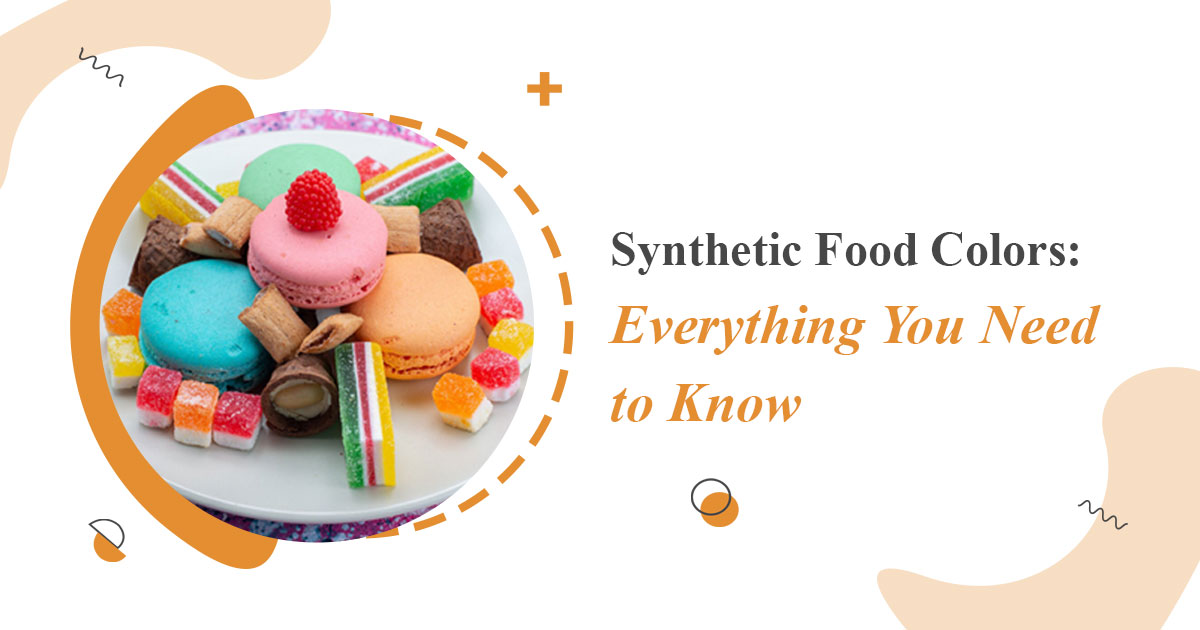
Synthetic food colors are becoming more popular, especially in growing economic countries like India and China. Until recently, it was permitted to add eight synthetic food dyes at a maximum level of 200 parts per million to specified foods. In this blog, we will explain everything you need to know about synthetic food colors.  The US FDA revised the regulatory provisions and made more stringent laws regarding synthetic food colors due to a wide prevalence of fraudulent practices such as using unpermitted colors or misusing permitted synthetic dyes or colors and the inherent toxicity of these dyes. It is imperative to generate data on the country’s dietary intake of food colors to obtain reductions in total exposure to uncertified colors.  Consumers can also play a crucial role in reducing their exposure to foodstuffs by requesting foodstuffs that don’t contain synthetic colors. It is because manufacturers add these colors to improve the appearance and consumer appeal. Whether you are a business or professional wondering what are synthetic food colors, you have come to the right place. The Use of Synthetic Food Colors Food and beverage manufacturers consider color one of the most important sensory properties. Color is one of the fastest ways consumers

Synthetic Food Colors: Everything You Need to Know Read More

Lake Colors vs. Pigments: What Sets Them Apart?
Pigments

Lake Colors vs. Pigments: What Sets Them Apart?

Lake colors are a type of pigment; however, they are different from other dyes and pigments in a few ways. When selecting between lake colors and pigments, it’s important to consider the application, ingredients, desired texture or color, and other finished product characteristics of both. This blog post will walk you through the difference between lake colors and pigments.  Although lake colors behave similarly to pigments, there are some key differences in how they function. Lakes are bound to a chemical substrate, including calcium, aluminum, talcum, or barium to create insoluble products. Nonetheless, this class of pigments is prone to de-lake-ing and bleeding when used in unsuitable ways.  If you are still wondering what is the key difference between lake colors and pigments, continue reading this blog further.  So, without any further ado, let’s dive right in! What are Lake Colors? Lake colors are pigments that are insoluble in water and are used as food coloring to produce colors, including food, cosmetics, and more. Several salts precipitate together with soluble dyes to create different types of lake colors. As a result, lake colors are manufactured using FD&C dyes, making it easier to mix them with fats, sugars, and oils. FD&C dyes and uses

Lake Colors vs. Pigments: What Sets Them Apart? Read More

Food Color Additives: What They Are and How They’re Used
Synthetic Dyes

Food Color Additives: What They Are and How They’re Used

Color additives are colors, colorants, or coloring agents widely used to impart color to different food & beverage products, making them more appealing to consumers. A color additive is any dye, pigment, or other substance for coloring food, drugs, or cosmetics. In this blog, we will discuss what are color additives in the food industry.  There’s a long history of food color additives as they have been used for centuries. Color additives are essential components of numerous products, making them more appealing, attractive, and appetizing than ever before. In addition to identifying candy flavors, medicine dosages, and left and right contact lenses on sight added color acts as a code.  Regarding the safety and appropriate use of color additives, the Food and Drug Administration (FDA) has an important role in this area. Whether you’re a business or an individual professional wondering what color additives are used in the food industry, you have come to the right place. What Are Color Additives? Color additives refer to any substances used to provide color to foods, drugs, or pharmaceuticals. The US FDA regulates and monitors the use of food color additives used in various industrial applications. These color additives are derived from natural sources for

Food Color Additives: What They Are and How They’re Used Read More

Permitted Synthetic Dyes: Everything You Need to Know
Synthetic Dyes

Permitted Synthetic Dyes: Everything You Need to Know

Permitted synthetic dyes are chemicals derived from coal-tar and petroleum-based chemicals used in foods, drugs, and cosmetics. The Food, Drug, and Cosmetics Act (FD&C Act) requires food colors or colorants to be tested for purity and to contain no specific contaminants within legal limits. In this blog post, we will walk you through the permitted synthetic dyes.  The use of permitted synthetic colors is regulated and monitored under the U.S. FDA Act to ensure product quality and efficacy. Permitted synthetic dyes or colors that are not permitted or colors that are used randomly can negatively affect humans and animals. These synthetic dyes are also known as certified synthetic colors or dyes most commonly used in cosmetics, foods, and pharmaceuticals.  Whether you’re a business or individual professional still wondering what are permitted synthetic dyes and need more information on the usage of synthetic dyes, continue reading this blog further. What are Permitted Synthetic Dyes? Permitted synthetic food dyes include Yellow dyes (Tartrazine, Sunset Yellow FCF), Blue dyes (Indigo Carmine, Brilliant Blue FCF), Red dyes (Ponceau 4R, Azorubine, Erythrosine), and the Green dye Fast Green FCF. These synthetic dyes must meet the requirements of the US FDA, EFSA, and FSSAI, and be pure and

Permitted Synthetic Dyes: Everything You Need to Know Read More

Certified Synthetic Colors: Ensuring Quality and Compliance
Cosmetic Colors

Certified Synthetic Colors: Ensuring Quality and Compliance

Certified color additives are synthetic colors, colorants, or coloring agents widely used to provide intense, uniform color, and more vibrant colors with various shades and hues to make the products more appealing and attractive to consumers’ eyes. These synthetic colors or color additives are classified as certified as they undergo rigorous testing and certification before they can be used in applications.  In this blog, you will learn what certified synthetic colors are, including their key features and advantages. We often wonder what are synthetic dyes or color additives and understand their uses. Synthetic colors, also known as certified colors, are regulated by the FDA through a stringent testing process through batch certification to ensure safety and efficacy.  The US FDA issues a certification if it finds that the synthetic color additive meets the required specifications per its quality standards. If you are still wondering what certified synthetic colors are and need more information on FDA-certified color additives, continue reading this blog further. What are Color Additives? A color additive refers to any substance that is used to provide color to foods, drugs, and cosmetics. Color additives combine both synthetic substances (such as coal-tar or petroleum-based chemicals) and substances extracted from natural sources

Certified Synthetic Colors: Ensuring Quality and Compliance Read More

Erythrosine Color: A Comprehensive Guide to Its Uses and Applications
Dyes

Erythrosine Color: A Comprehensive Guide to Its Uses and Applications

Erythrosine is a red dye commonly used as a color additive in foods, cosmetics, and pharmaceuticals. Erythrosine is a synthetic dye that is cherry pink or red, also known as Red No. 3 or FD&C Red No. 3. In this blog, we provide a basic understanding of Erythrosine Color – Acid Red 51 and various uses of Erythrosine color. If you are wondering what is Erythrosine and what its uses are, you have landed in the right place. In popular foods and beverages, Erythrosine Color – red dye 3 is a synthetic dye made from petroleum, also known as erythrosine.  Despite very little research, the coloring agent became the first to be approved in 1907. As of today, the use of Erythrosine Color is widespread for a diverse range of applications, including food, drugs, and cosmetics. What is Erythrosine Color – Acid Red 51? Erythrosine, also known as Acid Red 51 or FD&C Red No.3, is a red dye widely used in a variety of industries, including food, pharmaceuticals, and cosmetics. Erythrosine is derived from petroleum and was first approved in 1907. It is a derivative of Erythrosine and an organoiodine compound. Due to health concerns, the use of Erythrosine color or

Erythrosine Color: A Comprehensive Guide to Its Uses and Applications Read More

Types of Eosin Dye: Classifications and Applications
Dyes

Types of Eosin Dye: Classifications and Applications

A dye is an organic substance that can impart color to various substrates after it is absorbed into them. Dyes can be natural or synthetic. Chemical bonds are formed between dye molecules and surfaces, causing the dye molecules to become a part of the material. In this article, we will discuss Eosin dye and its applications in different industrial applications.  Xanthene is a class of dyes divided into three groups called subgroups and each subgroup has its subgroup name. The use of dyes is widespread in a comprehensive range of applications, including food, pharmaceutical, cosmetics, plastics, textile, inks, paint, leather, and paper industries. Eosin is an acidic orange-pink dye that provides very strong staining properties.  Hematoxylin and Eosin Y (H and E) are one of the most widely used techniques in histopathology laboratories. If are you still wondering what is Eosin dye and understand the synthetic application of Eosin Y in a variety of industries, continue reading this guide further. What is Eosin Dye? Eosin is a fluorescent dye, a xanthene dye also known as red dye produced with the reaction between bromine and fluoresce- which further ties up to salts with eosinophilic compounds that have positive charges. Typically, H&E staining uses

Types of Eosin Dye: Classifications and Applications Read More

Classifications of Phloxine B: Knowing the Uses and Mechanism of Action
Dyes

Classifications of Phloxine B: Knowing the Uses and Mechanism of Action

Phloxine B, or simply phloxine, also known as Acid Red No. 92 and D&C Red No. 28, is a color additive used as an inactive ingredient to impart color to certain substances or products and as a colorant in various dental disclosing tablets. Phloxine B is a water-soluble red dye that is approved and permitted for use in coloring drugs and cosmetics in the United States and coloring foods in Japan. This blog will talk about Phloxine B (D&C Red No. 28) and help you understand the classifications, uses, and mechanism of action.  Phloxine B, or simply phloxine, is a derivative of fluorescein. However, it differentiates the presence of four bromine atoms at positions 2, 4, 5, and 7 of the xanthene ring and four chlorine atoms in the carboxyphenyl ring. This water-soluble dye has an absorption maximum of around 540 nm and an emission maximum near 564 nm.  Phloxine B is widespread as an antimicrobial substance & functions as a viability dye and biological stain. That means it could also be utilized in hematoxylin-phloxine-saffron (HPS) staining to color the cytoplasm and connective tissue in shades of red. If you are an industrial or enthusiastic chemist wondering what is phloxine B

Classifications of Phloxine B: Knowing the Uses and Mechanism of Action Read More

Scroll to Top