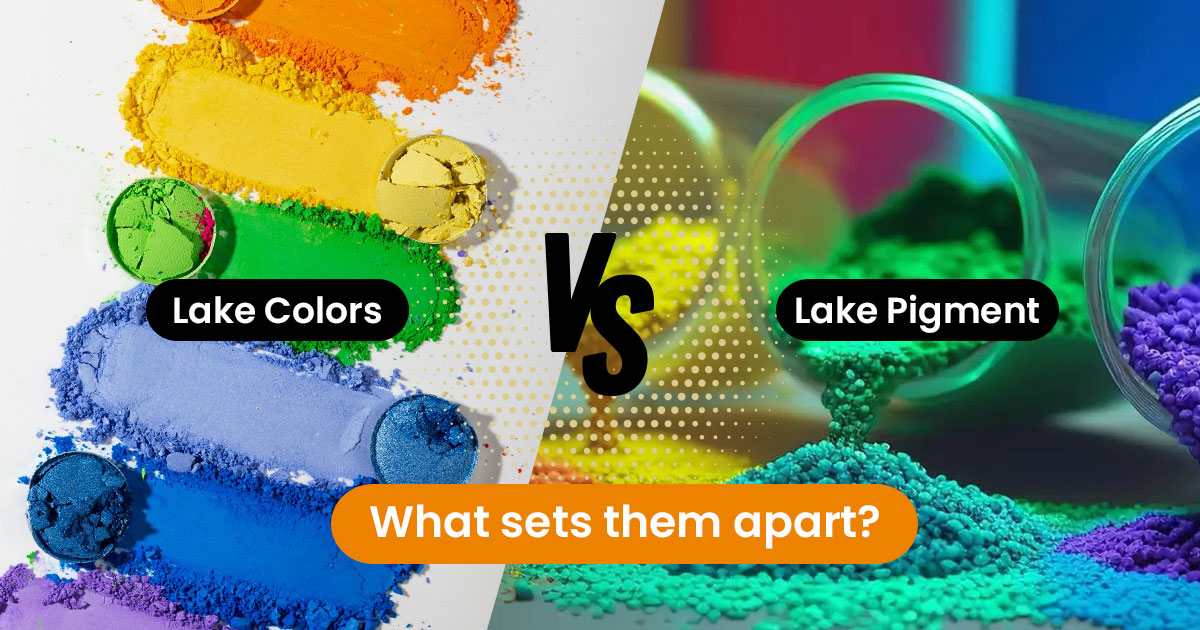
Lake Colors vs. Pigments: What Sets Them Apart?
Lake colors are a type of pigment; however, they are different from other dyes and pigments in a few ways. When selecting between lake colors and pigments, it’s important to consider the application, ingredients, desired texture or color, and other finished product characteristics of both. This blog post will walk you through the difference between lake colors and pigments. Although lake colors behave similarly to pigments, there are some key differences in how they function. Lakes are bound to a chemical substrate, including calcium, aluminum, talcum, or barium to create insoluble products. Nonetheless, this class of pigments is prone to de-lake-ing and bleeding when used in unsuitable ways. If you are still wondering what is the key difference between lake colors and pigments, continue reading this blog further. So, without any further ado, let’s dive right in! What are Lake Colors? Lake colors are pigments that are insoluble in water and are used as food coloring to produce colors, including food, cosmetics, and more. Several salts precipitate together with soluble dyes to create different types of lake colors. As a result, lake colors are manufactured using FD&C dyes, making it easier to mix them with fats, sugars, and oils. FD&C dyes and uses…
Lake Colors vs. Pigments: What Sets Them Apart? Read More