January 2025

17-Certified_Synthetic_Colors_A_Guide_to_Their_Uses_and_Benefits
Synthetic Dyes

Certified Synthetic Colors: A Guide to Their Uses and Benefits

Certified synthetic colors, or artificial colors, are used to color food and beverage products for various industrial applications. These synthetic colors are derived from coal-tar and petroleum-based chemicals. This blog post will walk you through the top 5 certified synthetic colors for food & beverage products.  Sunset yellow, brilliant blue, allura red, brilliant blue, and indigo carmine are a few examples of top-certified synthetic colors. The importance of synthetic dyes or colors are popular because they are less expensive and provide a more effective intense and vibrant color. Synthetic dyes are best known for providing a comprehensive range of dyes and hues.  Whether you are a business owner or an individual professional wondering about the top 5 certified synthetic colors for food & beverage products, continue reading this blog further. What are Certified Synthetic Colors? Certified synthetic colors, known as certified color additives, colorants, or coloring agents derived from coal tar and chemical reactions approved by the FDA for use in food, drugs, and cosmetics. The US FDA regulates the use of certified synthetic colors or permitted synthetic dyes to ensure they meet rigorous testing and quality standards.   A color additive is any dye, pigment, or other substance used to impart color to foods,…

Certified Synthetic Colors: A Guide to Their Uses and Benefits Read More
18-Safe_Versatile_Water_Soluble_Dyes_for_Every_Industry
Dyes

Safe & Versatile Water-Soluble Dyes for Every Industry

Water-soluble dye refers to a dye or pigment that can be dissolved in water directly without needing any binder or medium, ensuring clean, transparent water with zero impurities. There is a wide range of high concentrations of water-soluble and customized dyes that are easier to blend with brilliant shades and high color strength to obtain desired products.  All right! In this article, we will discuss everything you need to know about water-soluble dyes or coloring agents used in pharmaceuticals. Solvent Green 7 is an example of a water-soluble dye widely used in fluorescent inks, fluorescent marker pens, hand sanitizer, antifreeze, cutting fluid, aqueous ink, shampoo, soap, water chest, greases, aqueous materials, cosmetics, lubricating oil, etc.  There are various uses of fluorescent dyes in foods, pharmaceuticals, and cosmetics. Are you a business or an individual professional wondering about water-soluble dyes for pharmaceuticals, continue reading this further. What Are Water Soluble Dyes? Water-soluble dyes are colors, colorants, or coloring agents that can be dissolved easily in water or other solvents. They can be used in liquid form and offer more vibrant, bright colors for efficiently coloring a comprehensive range of products.  A lot of companies today use water-soluble dyes to enhance the visual appearance of

Safe & Versatile Water-Soluble Dyes for Every Industry Read More

Safe_Vibrant_Water_Soluble_Dyes_for_Cosmetic_Applications-1.jpg
Cosmetic Dyes

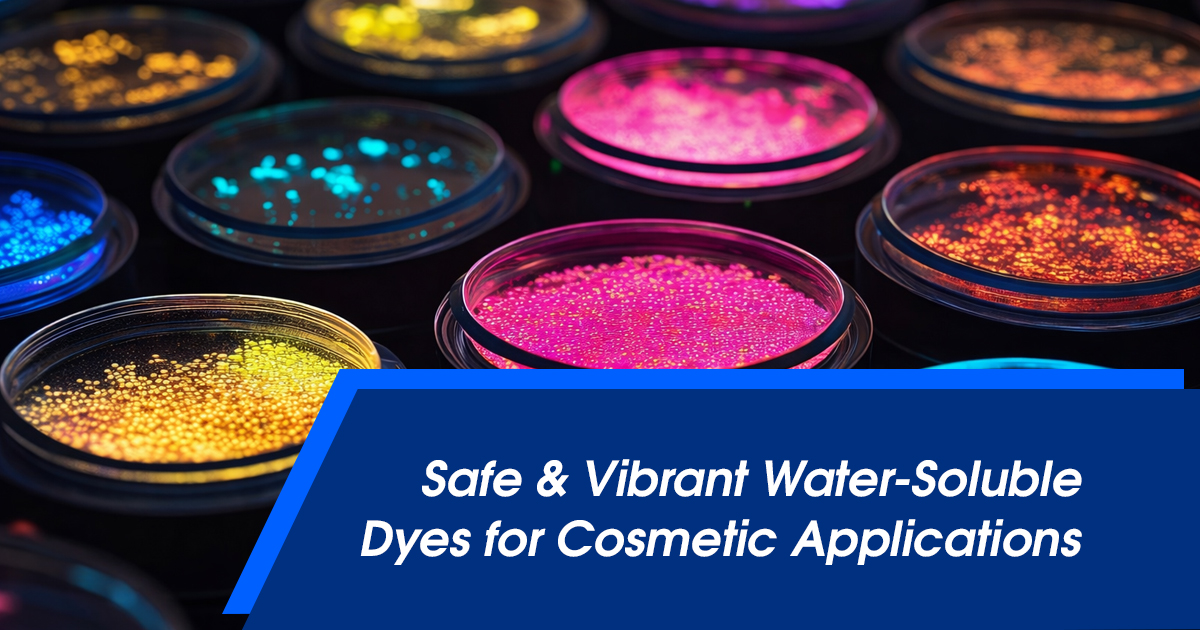
Safe & Vibrant Water-Soluble Dyes for Cosmetic Applications

Water-soluble cosmetic dyes are colors or colorants certified and approved for use in various industrial applications, including cosmetics, foods, and pharmaceuticals. Powder and Granular are the two forms of water-soluble cosmetic dyes that offer exceptionally high purity levels and an infinite spectrum of powder shades for coloring cosmetics and skin care products. This blog post will talk about water-soluble cosmetic dyes, including their advantages and disadvantages.  Understanding cosmetic colors, dyes and pigments is crucial before producing any kind of cosmetic products. Water-soluble cosmetic dyes are specialized colorants or coloring agents designed to dissolve in water, making them an ideal component in producing top-notch cosmetic formulations for businesses of all scales. These dyes offer greater versatility, enabling businesses to achieve cosmetic formulations with diverse aesthetics and effects.  These cosmetic dyes and pigments are widely used to color a wide range of products, including foundations, blushes, lipsticks, and other makeup applications since they provide more vibrant, brighter colors.  If you are a cosmetic manufacturer or an individual entrepreneur wondering about the uses of water-soluble cosmetic dyes and their importance in the cosmetic industry, continue reading this blog further. What are Water Soluble Cosmetic Dyes? Water-soluble cosmetic dyes are dyes or colorants that are dissolved in

Safe & Vibrant Water-Soluble Dyes for Cosmetic Applications Read More

Enhance Your Creations with Safe & Vibrant Synthetic Food Pigments
Pigments

Enhance Your Creations with Safe & Vibrant Synthetic Food Pigments

Synthetic food pigments are chemical compounds, also known as dyestuffs produced in labs to impart a stronger, brighter, longer-lasting color than natural pigments. These pigments are most widely used as food color additives to color various products, including pharmaceuticals, cosmetics, and foods. Well! In this blog post, you will learn what are synthetic food pigments and the uses of various types of synthetic food pigments in the industry.  Food pigments provide more vibrant, brighter colors, stable performance, tones, strong fastness, and easy color adjustment. While pigments used for cosmetics are slightly different from pigments used in food and beverage items. These food pigments are cost-effective and are widely used for large production.  As opposed to natural food pigments, synthetic food pigments are more stable and consistent and provide more vibrant color than natural food colors. The U.S. FDA regulates the use of these food pigments to ensure safety and precautions. These pigments are generally safe when used properly. What Are Synthetic Food Pigments? Synthetic food pigments are color pigments derived synthetically in a state-of-the-art laboratory through a well-defined process. These color pigments have greater stability and consistency than their natural counterparts. There is a great difference between organic pigments and inorganic pigments based on their chemical

Enhance Your Creations with Safe & Vibrant Synthetic Food Pigments Read More

Enhance Your Products with High-Quality Pharmaceutical Colors
Pharmaceutical Colors

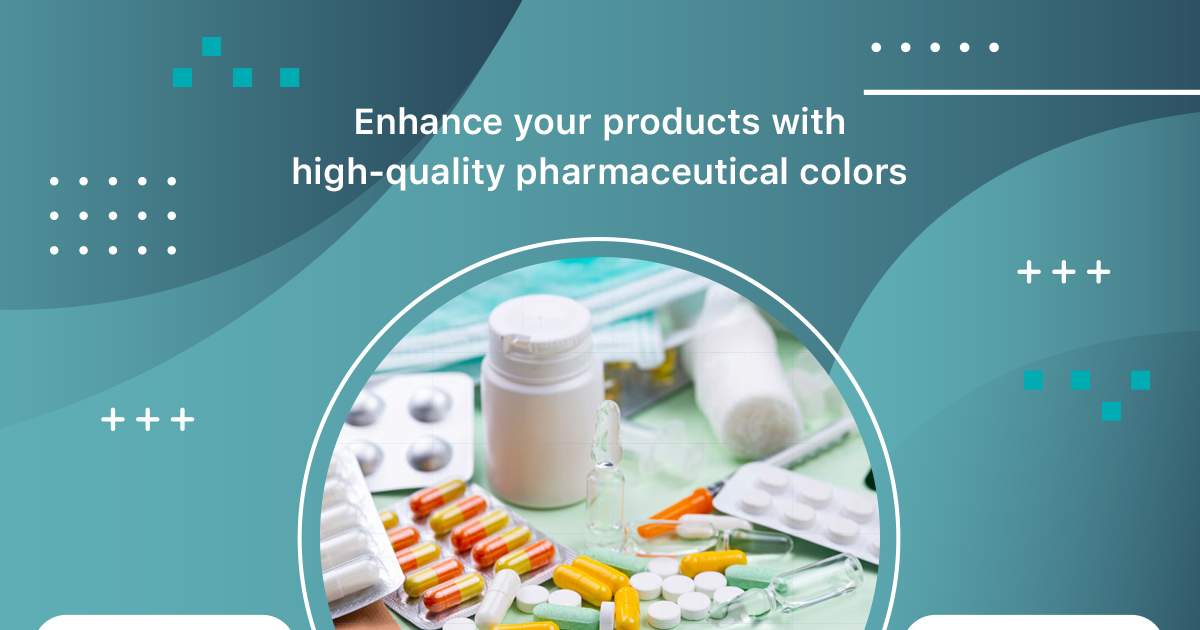
Enhance Your Products with High-Quality Pharmaceutical Colors

Pharmaceutical colors are widely used as a food color additive to impart desirable color to products, including syrup, tablets, capsules, and more. The primary purpose of adding pharmaceutical colors is to enhance the visual appearance of products and make them more appealing to consumers’ eyes. However, it is vital to make the right color selection when it comes to pharmaceutical colors, colorants, or coloring agents.  All right! In this blog post, you will learn what pharmaceutical colors are and how to choose the right one to suit your unique business needs. Businesses today need to emphasize trust, color consistency, and reliability. Choosing the right food colors for pharmaceutical dosage forms is crucial to ensuring the perfect formulation.  It’s important to emphasize colors with different shades of blue, green, and white while considering specific drug types, target audiences, and brand identity can help ensure consistency throughout the process.  Whether you’re a business or an individual entrepreneur wondering how to choose the right pharmaceutical colors or colorants for pharmaceutical dosage forms, continue reading this blog further.  What Are Pharmaceutical Colors? Pharmaceutical colors, colorants, or coloring agents are color additives that provide different colors to various pharmaceutical products, including syrups, tablets, capsules, and more. White, Blue, Green,

Enhance Your Products with High-Quality Pharmaceutical Colors Read More

Safety Concerns for Color Pigments In Cosmetics
Cosmetic Colors

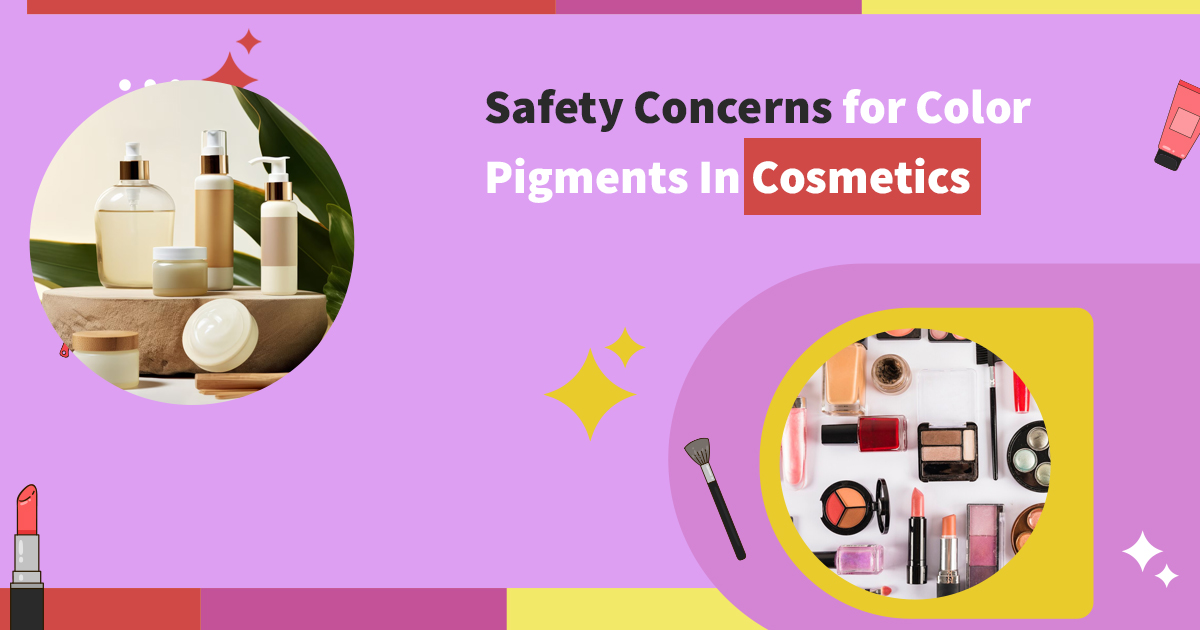
Safety Concerns for Color Pigments In Cosmetics

Thanks to research and new technology, the Color Pigments in Cosmetics industry has improved. Consumers can now find better shades of cosmetic pigments and lakes. Brand investment in research and development labs has increased over the past few years. Cosmetic colors, like pigments used for cosmetics, are still checked for heavy metals. This helps prevent health risks. This blog will discuss safety concerns for color pigments in cosmetics.  Pigments, also known as dyes or colorants, are broadly classified as organic and inorganic pigments. They are widely used as coloring agents in cosmetics, foods, and pharmaceuticals. There is a great difference between organic pigments and inorganic pigments based on their chemical properties and structure.  Iron oxides, chromium, ultramarine, etc., are a few examples of inorganic colorants used for producing cosmetics. In contrast, titanium dioxide and zinc oxide are examples of organic colorants used in cosmetic applications. If you are still wondering what cosmetic color pigments are and how safe they are, continue reading this blog. What are Cosmetic Color Pigments? Cosmetic color pigments refer to finely ground particles that are used to provide color to cosmetics and skin care products. Cosmetic color pigments are insoluble, which means they don’t dissolve and remain suspended in

Safety Concerns for Color Pigments In Cosmetics Read More

What Are Plastic Colorants and Their Importance?
Pharmaceutical Colors

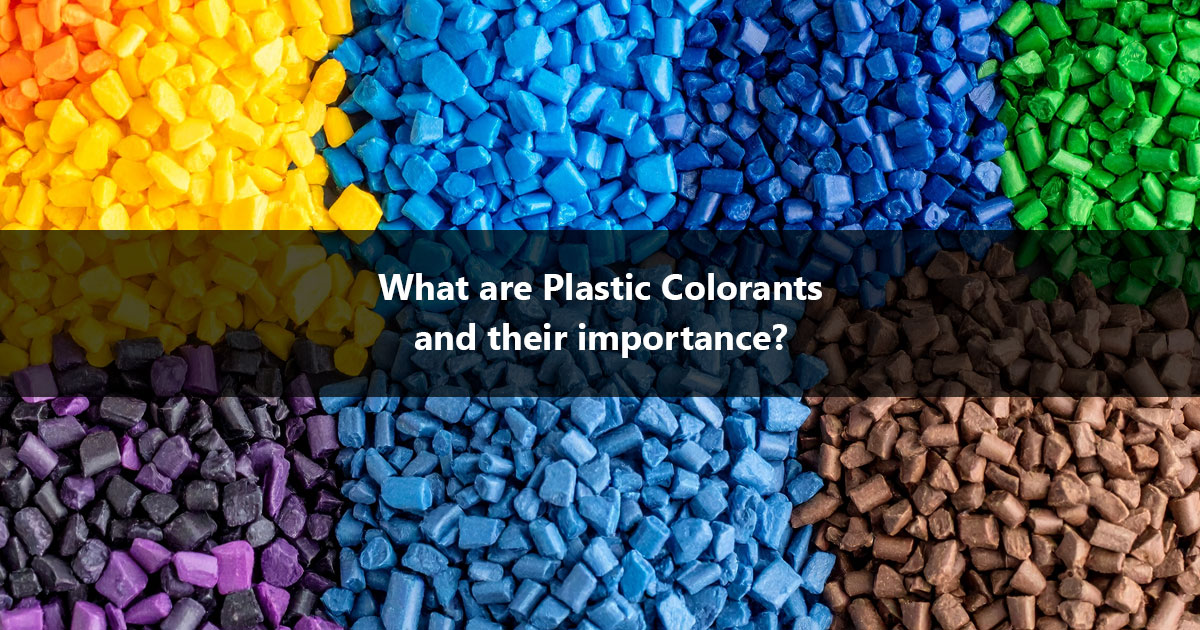
What Are Plastic Colorants and Their Importance?

Plastic colorants or plastic dyes refer to chemical compounds used to color different plastic products. These compounds are in the form of dyes and pigments that have properties to produce various colors and hues more efficiently. In plastic colorants, colorant types are decided based on polymeric resin to color plastic products. This blog will discuss everything you need to know about plastic colorants or plastic dyes for your business. Appearance is the first impression when it comes to purchasing a product. Plastics get their unique appearance when choosing the right food colors, which make them visually appealing and distinct. The use of a wide range of colors can help plastic manufacturers differentiate their products in an overcrowded market. There are several ways to make a lasting impression on consumers with color, including packaging, automotive components, and even packaging for consumer goods. Generally, polystyrene, polycarbonate, and acrylic polymers are used for dyes in plastic colorant formulation. Pigments work best with polyolefins when used in colorant applications. Talking about plastic colorant usages, they are generally applied to knead colorants into plastics to give them a desired color.  If you’re still wondering about the various applications of plastic colorants, their roles, applications, and types, then this

What Are Plastic Colorants and Their Importance? Read More

FDA-Certified Colors: Ensuring Safety and Quality
Food Colors

FDA-Certified Colors: Ensuring Safety and Quality

Colorants, colors, or coloring agents are color additives that provide color to foods, cosmetics, pharmaceuticals, and other products. Color additives can be both synthetic substances and substances obtained from natural sources from natural sources. The use of food color additives improves the appearance of products and makes them more eye-catching to consumers. In this blog, you will learn how FDA-certified colors are identified.   The Federal Food, Drug, and Cosmetic Act requires FDA approval for food, drugs, cosmetics, or medical devices that come into contact with people or animals for an extended period. Color additives derived from coal-tar or chemical reactions, also known as coal-tar dyes must be certified and approved by the US FDA.  These color additives are also known as food dyes. If you are a business owner or entrepreneur wondering how FDA-certified colors are identified, continue reading this blog further. What Are FDA-Certified Colors? Under the Federal Food, Drug, and Cosmetic Act (FD&C Act), all color additives need FDA approval before they can be applied to foods, medicines, cosmetics, and medical devices designed for sale in the United States. Understanding FDA-certified colors is important for businesses as well as individual professionals.  The FDA requires food color manufacturers to apply for approval before launching new

FDA-Certified Colors: Ensuring Safety and Quality Read More

Synthetic Food Colors: Everything You Need to Know
Food Colors

Synthetic Food Colors: Everything You Need to Know

Synthetic food colors are becoming more popular, especially in growing economic countries like India and China. Until recently, it was permitted to add eight synthetic food dyes at a maximum level of 200 parts per million to specified foods. In this blog, we will explain everything you need to know about synthetic food colors.  The US FDA revised the regulatory provisions and made more stringent laws regarding synthetic food colors due to a wide prevalence of fraudulent practices such as using unpermitted colors or misusing permitted synthetic dyes or colors and the inherent toxicity of these dyes. It is imperative to generate data on the country’s dietary intake of food colors to obtain reductions in total exposure to uncertified colors.  Consumers can also play a crucial role in reducing their exposure to foodstuffs by requesting foodstuffs that don’t contain synthetic colors. It is because manufacturers add these colors to improve the appearance and consumer appeal. Whether you are a business or professional wondering what are synthetic food colors, you have come to the right place. The Use of Synthetic Food Colors Food and beverage manufacturers consider color one of the most important sensory properties. Color is one of the fastest ways consumers

Synthetic Food Colors: Everything You Need to Know Read More

Scroll to Top