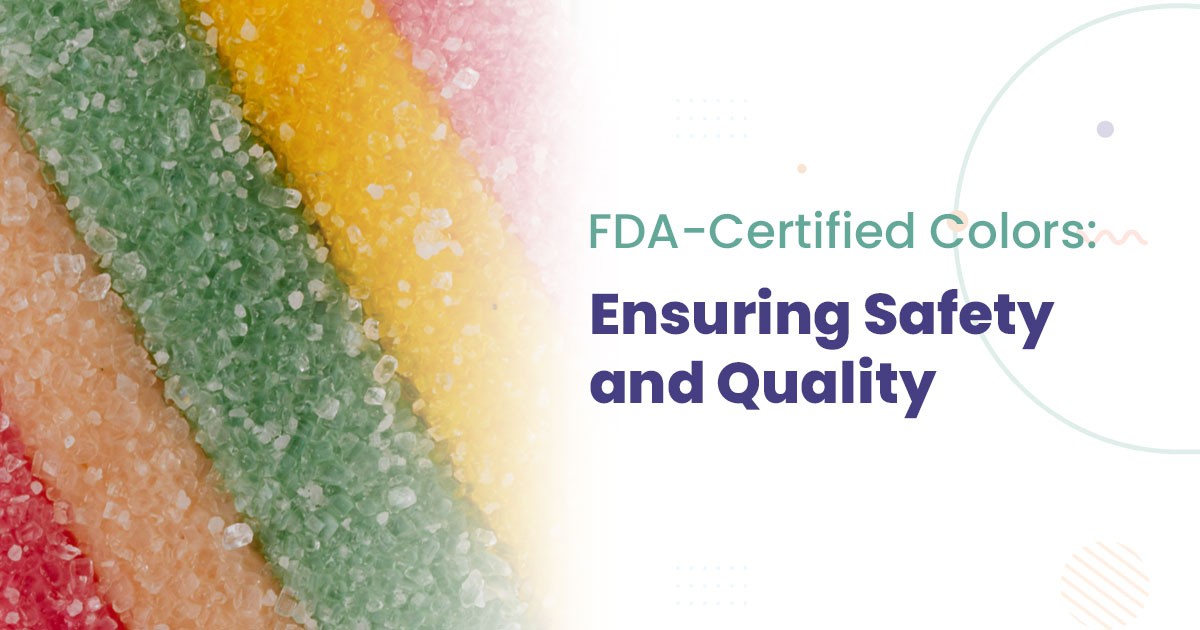
FDA-Certified Colors: Ensuring Safety and Quality
Colorants, colors, or coloring agents are color additives that provide color to foods, cosmetics, pharmaceuticals, and other products. Color additives can be both synthetic substances and substances obtained from natural sources from natural sources. The use of food color additives improves the appearance of products and makes them more eye-catching to consumers. In this blog, you will learn how FDA-certified colors are identified. The Federal Food, Drug, and Cosmetic Act requires FDA approval for food, drugs, cosmetics, or medical devices that come into contact with people or animals for an extended period. Color additives derived from coal-tar or chemical reactions, also known as coal-tar dyes must be certified and approved by the US FDA. These color additives are also known as food dyes. If you are a business owner or entrepreneur wondering how FDA-certified colors are identified, continue reading this blog further. What Are FDA-Certified Colors? Under the Federal Food, Drug, and Cosmetic Act (FD&C Act), all color additives need FDA approval before they can be applied to foods, medicines, cosmetics, and medical devices designed for sale in the United States. Understanding FDA-certified colors is important for businesses as well as individual professionals. The FDA requires food color manufacturers to apply for approval before launching new
FDA-Certified Colors: Ensuring Safety and Quality Read More