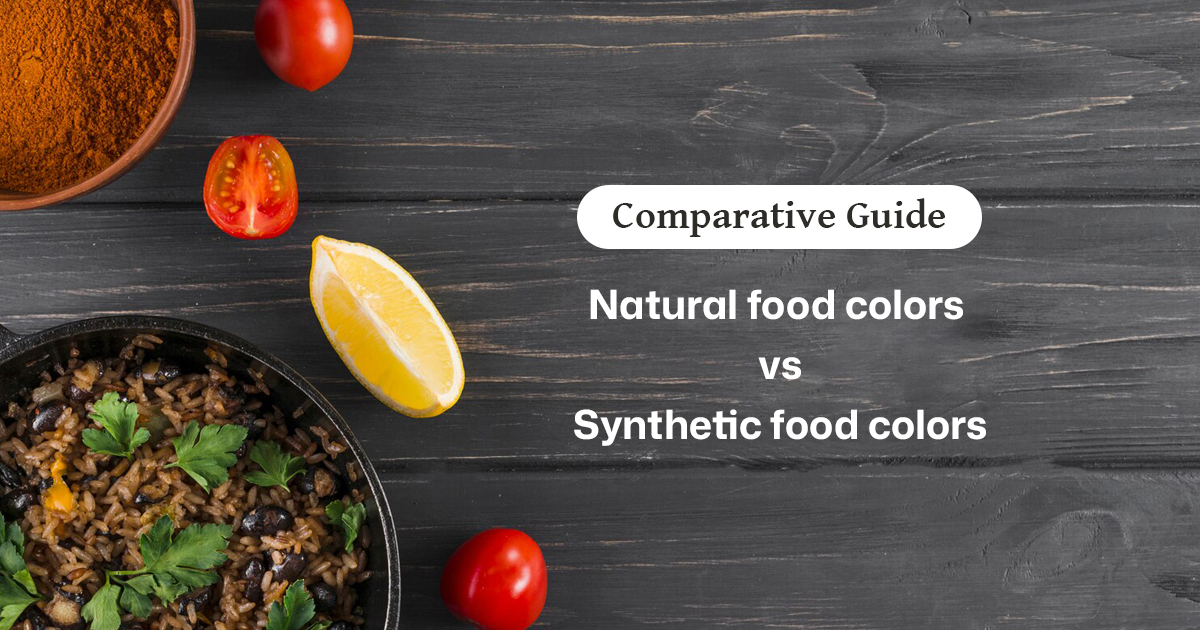
Comparative Guide: Natural food colors vs Synthetic food colors
Food colors, colorings, or colorants are most commonly used in foods and beverages, pharmaceuticals, and cosmetics. There are two types of food coloring or food colors: natural food colors and artificial food colors, each comes with its benefits and disadvantages. Well! Here we will talk about natural food colors vs synthetic food colors and explore the pros and cons of both types of food colorings. Food colors are widely popular for use in a variety of industrial and domestic applications, including coloring foods, tablets, cosmetics, plastics, home and personal care products, and more. Natural food colors are colorants derived from natural sources, such as plants, trees, vegetables, fruits, etc. Synthetic food colors are produced from coal tar or petroleum-based chemicals in a well-crafted laboratory environment. Both natural food colors and synthetic food colors have their advantages and disadvantages and tend to have unique human perceptions based on health concerns, safety, and authority regulations. Let’s dive deeper to understand the difference between natural food colors and synthetic food colors. Before we dig deeper into the debate about natural food colors vs synthetic food colors, let’s understand the food coloring first. What is food coloring? Food coloring, colorants, or coloring agents refer…
Comparative Guide: Natural food colors vs Synthetic food colors Read More