January 2025

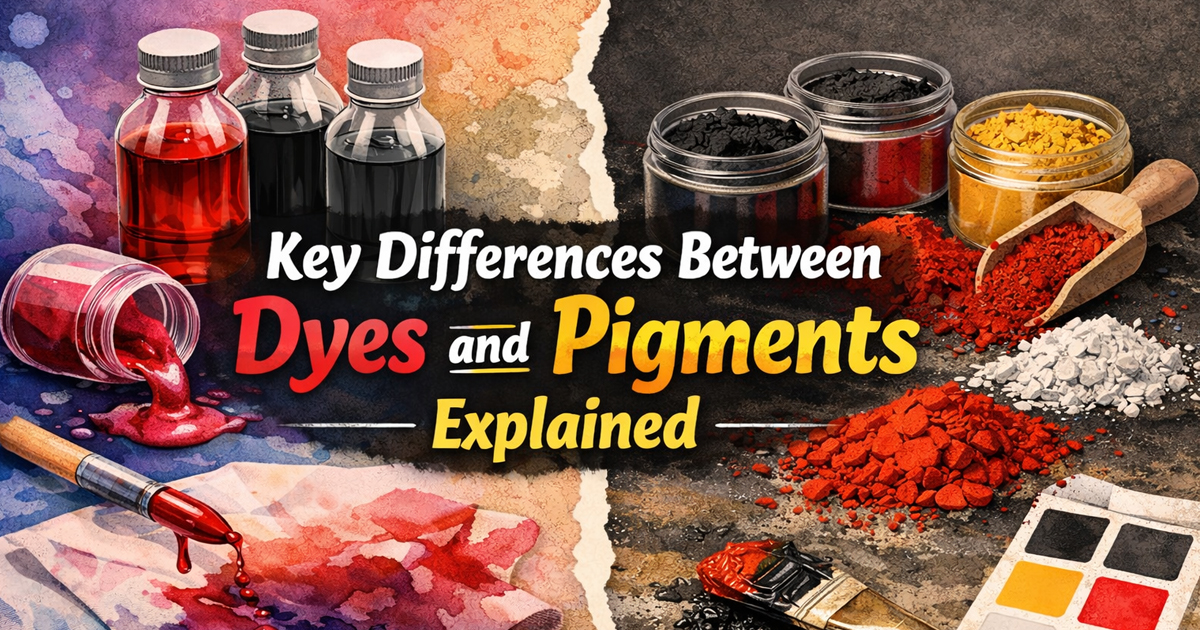
Key Differences Between Dyes and Pigments Explained
Pigments

Key Differences Between Dyes and Pigments Explained

Dyes and pigments are the main types of colorants widely used for coloring different materials they are applied. The difference between dyes and pigments is their solubility: dyes are soluble in water and pigments are insoluble and are dispersed in a binder or medium. In this blog, we will discuss what is the difference between dyes and pigments.  Dyes and pigments behave differently because of their particle size, making them distinct. Both dyes and pigments are used as colorants in various industrial applications, ranging from food, drugs, and cosmetics to home and personal care products.  If you are wondering what are dyes and pigments and what differentiates them from each other, then you have come to the right place. Continue reading this blog further to get a better understanding of the difference between dyes and pigments. Basic Understanding of Dyes? Many of us often wonder what are dyes and how they are produced. Dyes are colored substances used to provide color to materials they are applied. Dyes provide more vibrant, brighter colors that offer greater stability and durability and don’t fade away over time.  Synthetic dyes and Natural Dyes are two main types of dyes widely used for coloring different materials. When it comes…

Key Differences Between Dyes and Pigments Explained Read More
Unlock the Secrets: A Deep Dive into the Classification of Dyes and Pigments
Pigments

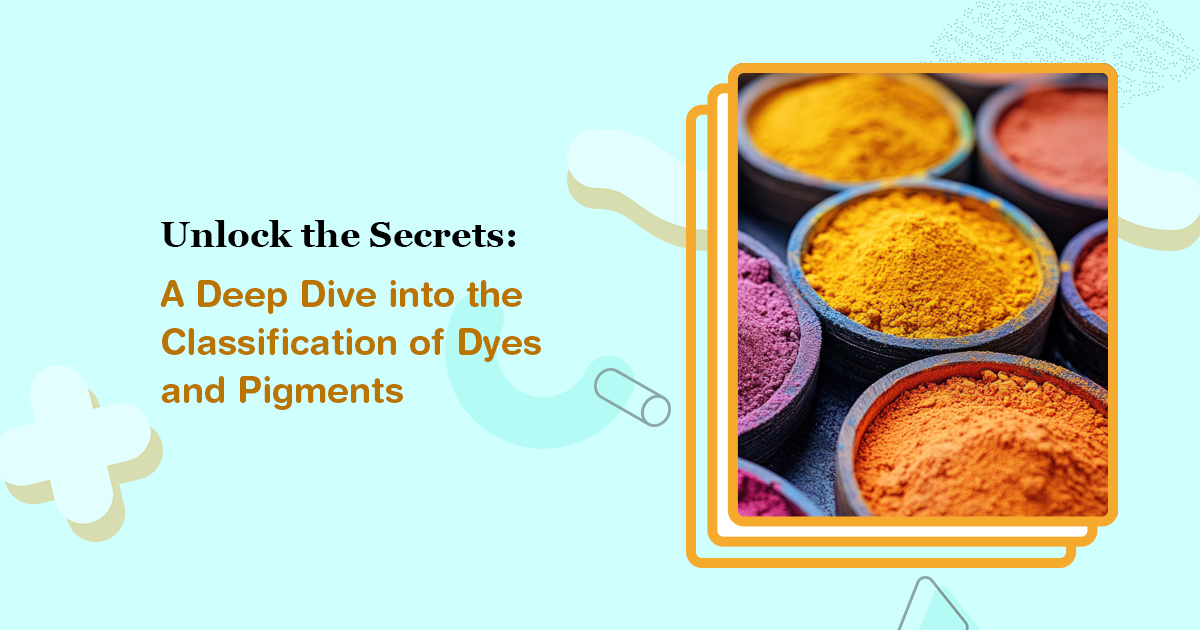
Unlock the Secrets: A Deep Dive into the Classification of Dyes and Pigments

Until the discovery of synthetic dyes and pigments, natural colorants such as flowers, plants, and minerals were the only sources of natural colorants. There has been a massive increase in the number and kind of colorants, making their classification mandatory. In this guide, we will discuss the classification of dyes and pigments.  What are dyes and pigments? How they are produced? And what are the classifications of dyes and pigments? Dyes or colorants are categorized according to various factors, like structure, source, color, solubility, and application.  They are divided into two categories: dyes and pigments based on the chemical structure and application method of dyes. Azo dyes are classified as anthraquinone, anthraquinone-containing dyes, indigo dyes, phthalocyanine dyes, sulfur dyes, nitro dyes, and nitroso dyes based on the chemical structure of the dyes. Based on the application method, pigments were grouped as reactive, dispersed, acid, basic, direct, and vat dyes. Nonetheless, based on their chemical composition, pigments can also be considered organic versus inorganic. So, let’s dive right into the classification of dyes and pigments and understand their significance in various industries. What are dyes and pigments? Dyes and pigments are both substances that impart color to different materials, although they work

Unlock the Secrets: A Deep Dive into the Classification of Dyes and Pigments Read More

Synthetic Dyes

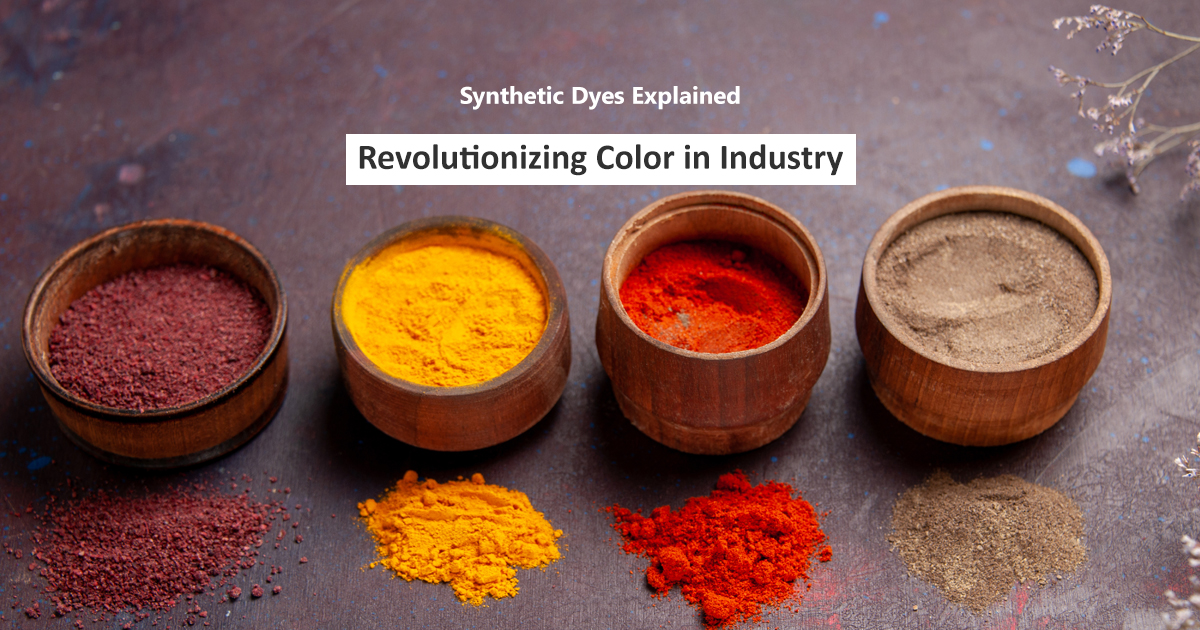
Synthetic Dyes Explained: Revolutionizing Color in Industry

Synthetic dyes are chemical compounds derived from coal tar or petroleum-based chemicals in a well-designed laboratory. Synthetic dyes and chemicals are rapidly increasing due to their powerful capabilities to produce more vibrant, bright colors, making the product more appealing, attractive, and pleasing to consumers. In this blog, we will talk about synthetic dyes and explore their various applications in different industries.  Synthetic dyes are used for food coloring due to their several advantages and chemical properties, which enhance the overall look and feel of food items. They are also widely used in various industrial applications, including drugs, cosmetics, textiles, plastics, and more, to enhance the visual appearance of products.  Synthetic dyes are popular worldwide due to their cost-effectiveness, ease of use, wide range of color variables, durability, and greater shelf life value. Artificial dyes are certified and tested under a rigorous testing process set by the U.S. FDA and EFSA to ensure the safety and proper use in various applications.  If you’re wondering about synthetic dyes and their advantages and disadvantages, continue reading this blog.  Understanding Dyes What are dyes? How are dyes obtained? You often think about that when it comes to dye. Dyes are chemical substances that impart color to materials

Synthetic Dyes Explained: Revolutionizing Color in Industry Read More

Scroll to Top