
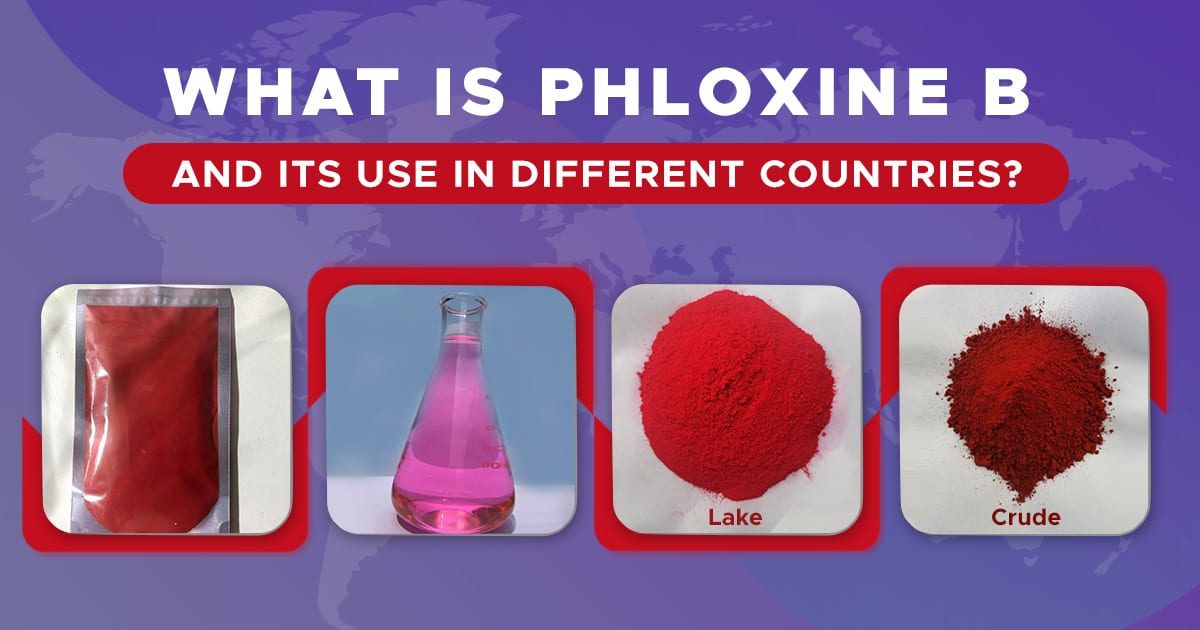
Phloxine B Dye: Applications, Properties, and Mechanism
Introduction Dyes are critical in various scientific, industrial, and cosmetic applications. From staining biological samples in laboratories to adding color to commercial products, these compounds are essential for visualization, analysis, and aesthetic enhancement. Among the many dyes used in science and industry, the Phloxine B dye stands out for its versatility and precision in biological staining. Researchers and product developers widely utilize it in microbiology, cell biology, and personal care formulations due to its vivid coloring and functional properties. What is Phloxine B Dye? Phloxine B dye is a synthetic, water-soluble xanthene dye commonly used for its bright pink to red coloration. Chemically, it is a fluorescein derivative categorized as an acid dye. Its molecular formula is C20H4Br4Cl2Na2O5, which includes multiple halogen atoms contributing to its intense coloration and staining abilities. This dye appears as a red powder and dissolves easily in water or ethanol, making it ideal for preparing staining solutions. Scientists recognize its strong affinity for binding with proteins, which makes it particularly useful for staining cell structures and identifying dead cells in microbiological studies. Read More: FD&C dyes and their uses for coloring Applications of Phloxine B Dye Scientists and manufacturers prize Phloxine B dye for its…
Phloxine B Dye: Applications, Properties, and Mechanism Read More